Feature
The Finest V12 Combustion Engine Cars for Sale!
We’ve searched our selection of Dealer Partners to find some of the finest V12s available for you to buy right now.
November 4, 2026
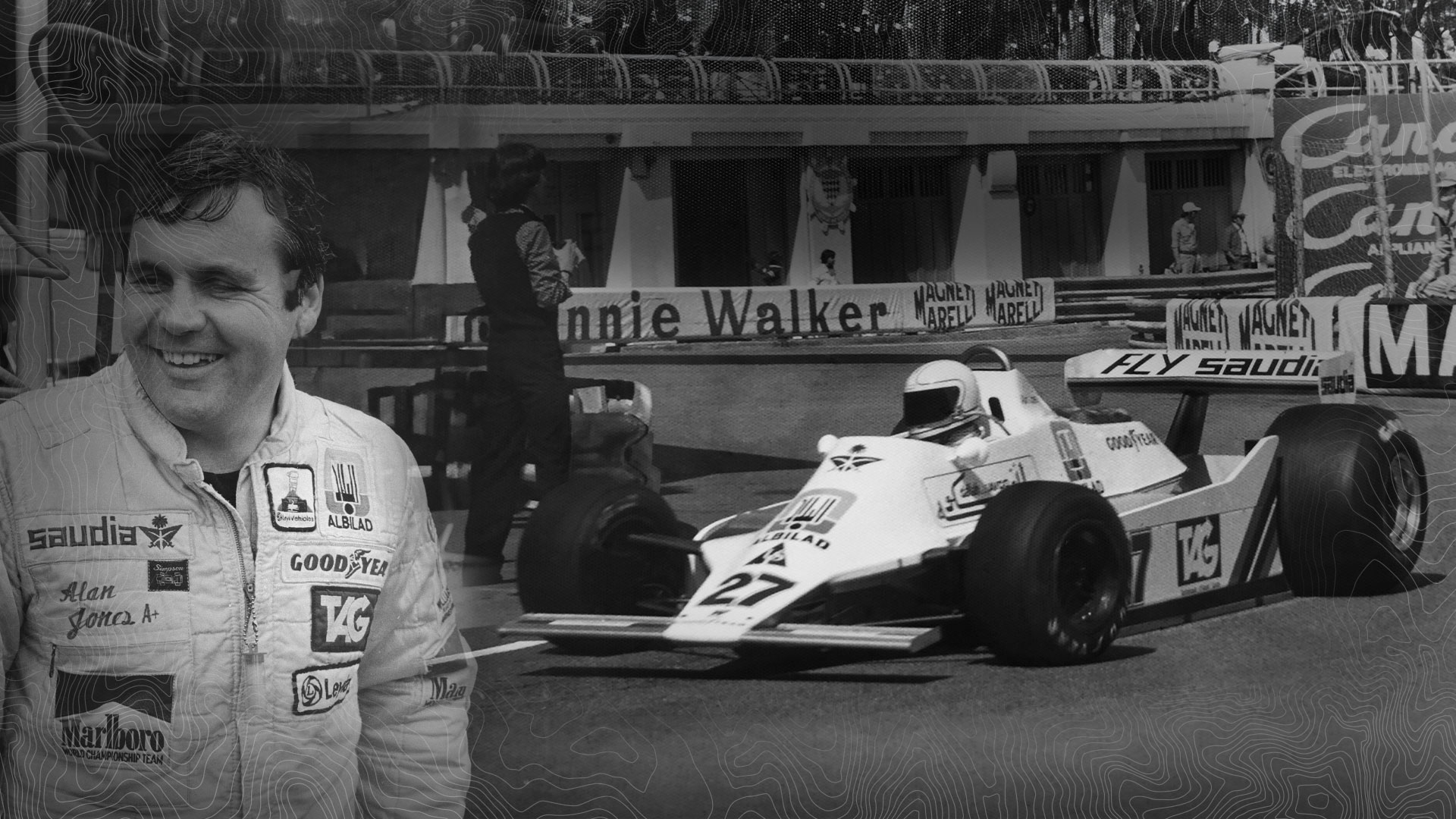
Outspoken, uncompromising and utterly brilliant. We remember Alan Jones, the Australian who helped turn Williams into Formula One champions.
There was a time in Formula One when drivers didn’t have personal brand managers, media training, carefully rehearsed answers or an army of people employed to make sure they didn’t accidentally say something interesting. They smoked, they drank, they occasionally punched one another, and if somebody asked them a stupid question, there was a reasonable chance they’d receive an answer that couldn’t be broadcast before the watershed.
Alan Jones belonged to that generation. In fact, he might have been its Australian ambassador.
He was gruff, stubborn, spectacularly outspoken and possessed a remarkable ability to fall out with people without appearing particularly concerned about the consequences. He wasn’t especially interested in making friends with his competitors, didn’t suffer fools gladly and approached motor racing with the attitude that anyone occupying the piece of tarmac immediately in front of him was an inconvenience that needed removing. And he was absolutely bloody brilliant.
On 5 November 2026, just three days after celebrating his 80th birthday, Alan Jones died following a short illness. With him went one of the last great characters from an era when Formula One was as much about the personalities inside the cars as the engineering beneath them.
He won 12 World Championship Grands Prix, became Australia’s second Formula One World Champion and delivered Williams its first Drivers’ Championship in 1980. Yet the numbers, impressive as they are, tell only a fraction of the story, because Jones was one of those extraordinary individuals whose journey to the top was considerably more interesting than simply arriving there. And it began, rather appropriately, with a father who was every bit as colourful as his son.
Alan was born in Melbourne on 2 November 1946, the son of Stan Jones, a successful car dealer and formidable racing driver who would win the 1959 Australian Grand Prix in a Maserati 250F.
Stan was quite a character. At the height of his business success, he was selling hundreds of Holdens every month, owned some wonderfully exotic racing machinery and travelled to events with an entourage that wouldn’t have looked out of place accompanying a minor European monarch.
Young Alan grew up surrounded by racing cars, engines and people who regarded driving at enormous speeds as an entirely sensible way of spending a Sunday afternoon.
His first competition car was a Mini, purchased for £250. Stan then spent almost four times that amount preparing it for competition, which is the sort of financial logic that will be immediately familiar to anyone who has ever owned a racing car. Alan promptly spun it at the first corner. Not the most encouraging start for a future World Champion, although he eventually became the Victorian Hillclimb Champion in the little car.
There was another obstacle. Australian states had different minimum driving ages, so Alan established an address in South Australia, where he could obtain his licence at 16. Even as a teenager, he wasn’t particularly interested in waiting for someone else to tell him when he could go racing.
Then everything changed. Stan’s motor business collapsed during an economic downturn, taking the family’s comfortable lifestyle with it. Alan, who would later describe his younger self as a thoroughly spoilt and rather arrogant child, suddenly discovered that racing cars cost money, money required work, and the world wasn’t especially interested in helping him.
Years later, he admitted that his father’s financial collapse might have been the best thing that ever happened to his career. Without it, he believed, he might never have developed the determination required to become a proper racing driver.
It’s a fascinating admission from a man who would eventually become World Champion. Sometimes losing everything is what teaches you how badly you want something.
In 1970, Jones arrived in London with just £75 in his pocket and a determination to make it in European motor racing. Seventy-five quid! Today, that might just about cover the parking at a Formula One Grand Prix, provided you don’t actually want to park anywhere near the circuit.
Alongside fellow Australian Brian McGuire, Jones began buying and selling second-hand Volkswagen camper vans to visiting Australians and New Zealanders. His wife Bev helped support their ambitions, at one point running a boarding house for travelling compatriots.
It wasn’t glamorous. There were no junior driver academies, no simulator programmes and certainly no wealthy sponsors waiting to fund his next season. There were old racing cars, borrowed money, mechanical disasters and the occasional broken bone.
A Formula Ford was purchased, followed by an ageing Lotus 41. Jones subsequently acquired a damaged Brabham Formula Three car, which had to be repaired before he could compete in the fiercely competitive British championship.
And competitive it certainly was. British Formula Three in the early 1970s was packed with ambitious young men, many of whom would go on to become household names. Jones raced against the likes of James Hunt, another individual who would probably have found modern Formula One’s media obligations somewhat tiresome.
But while Hunt was developing a reputation for spectacular driving and an equally spectacular social life, Jones was simply trying to survive financially long enough to reach the next race.
Then, in 1973, something happened that would stay with him for the rest of his life. His father died.
Shortly afterwards, Alan won an important Formula Three race at Silverstone, driving an older car after damaging his regular machine. When he received the traditional winner’s laurel wreath, the emotion finally overwhelmed him.
He took the wreath home to Australia and placed it on his father’s coffin. For all the stories about Jones being a hard man, a difficult man and a man who could start an argument in an empty room, that small gesture tells you rather more about the person beneath the exterior.
The little boy who had grown up watching his father race had finally started winning himself. And the person he most wanted to share it with was no longer there.

Jones finally reached Formula One in 1975, driving a Hesketh previously raced by James Hunt. His debut came at the Spanish Grand Prix at Montjuïc, a dreadful event overshadowed by a fatal accident that killed spectators and demonstrated just how dangerous the sport remained.
He subsequently drove for Graham Hill’s team before joining Surtees in 1976, where he managed the impressive achievement of falling out with John Surtees, himself a man not exactly renowned for his willingness to compromise. By the end of that season, Jones had decided he’d rather risk unemployment than spend another year driving for somebody he couldn’t get along with.
In 1977, he joined Shadow following the tragic death of Welsh driver Tom Pryce. It was hardly the happiest way to secure a Formula One seat, but Jones knew opportunities were rare and had no intention of wasting one.
That August, at the Austrian Grand Prix, he started 14th in difficult conditions and somehow emerged victorious, giving Shadow its first and only World Championship Grand Prix win. Suddenly, the Australian who had arrived in England with £75 was a Formula One race winner. And Ferrari came calling.
Jones later maintained that he had an agreement to join the Italian team, only for Ferrari to choose a young Canadian called Gilles Villeneuve instead. One suspects Jones didn’t send Enzo Ferrari a Christmas card that year.
But what appeared to be a crushing disappointment would turn out to be one of the greatest strokes of luck in his career, because another man had been watching. His name was Frank Williams.

In 1978, Williams Grand Prix Engineering was still a relatively small operation with big ambitions and considerably smaller resources. Frank Williams had endured years of financial struggles, while his brilliant engineer Patrick Head was developing a reputation for designing racing cars that were both clever and properly engineered.
They needed a driver who could extract everything from their machinery, explain precisely what needed improving and wouldn’t spend half his time complaining that the catering wasn’t up to standard. Jones was perfect.
Frank Williams was stubborn, Patrick Head was stubborn, and Alan Jones was so stubborn that putting the three of them together probably represented a significant risk to the structural integrity of the team’s motorhome. But they understood one another.
Jones could tell Head exactly what the car was doing, Head could translate that information into improvements, and Williams had an extraordinary ability to motivate his driver.
In 1979, the Williams FW07 arrived, exploiting ground-effect aerodynamics to produce enormous levels of downforce. Clay Regazzoni delivered the team’s first victory at Silverstone, but Jones quickly established himself as its leading force, winning four races and finishing third in the championship.
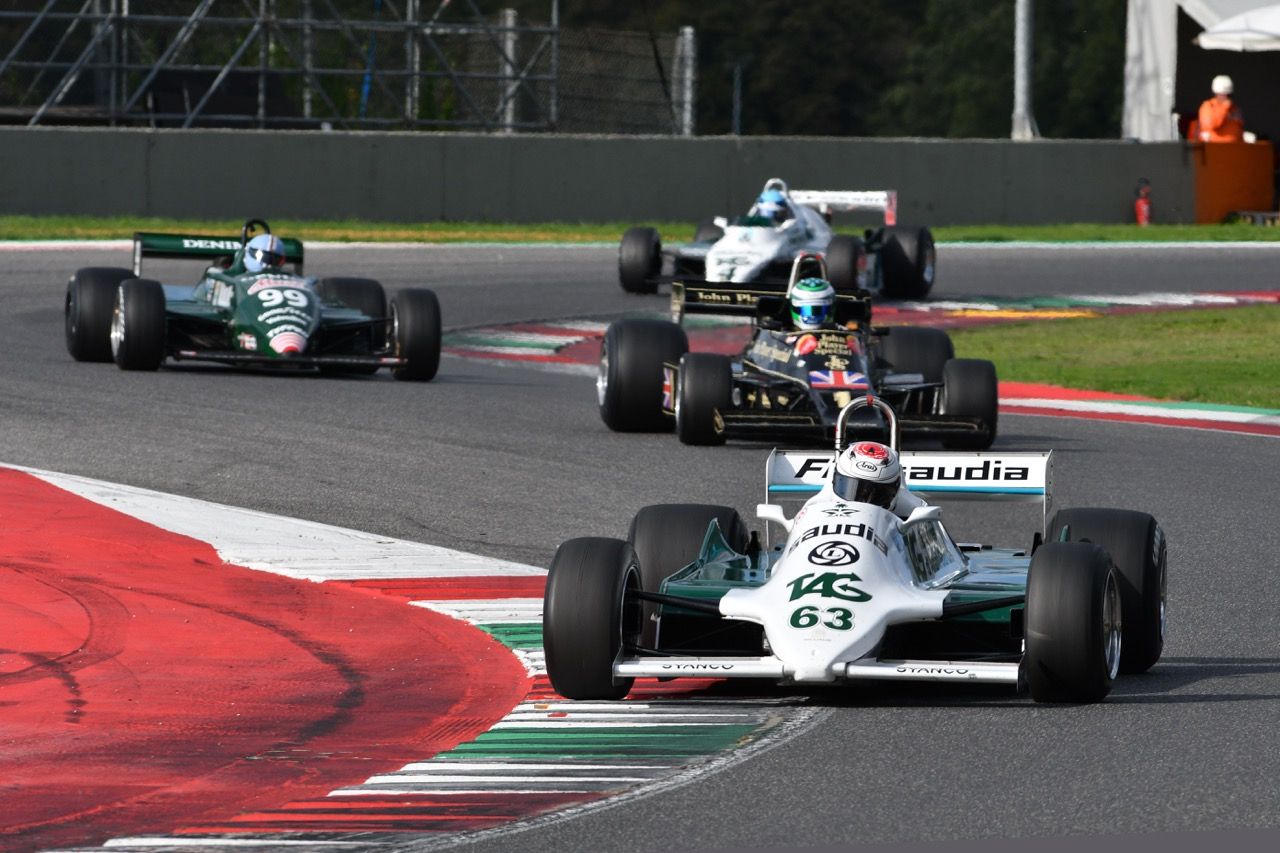
Jones won five Grands Prix, fought a fierce championship battle with Nelson Piquet and secured the title in Canada. He finished the season with another victory at Watkins Glen, while Williams claimed the Constructors’ Championship.
For the first time, the little team Frank Williams had fought so desperately to establish had produced a World Champion. And the man responsible was the Australian who had once been reduced to selling second-hand Volkswagen camper vans. There is something wonderfully satisfying about that.
One of my favourite things about Jones is that he made absolutely no attempt to disguise his attitude towards his competitors. In a 2019 interview, he explained that he regarded the other drivers simply as obstacles to be overtaken. He also admitted that being passed by another driver felt like a personal insult, which probably made him rather difficult company at the drivers’ briefing.
His relationship with Williams teammate Carlos Reutemann became particularly poisonous in 1981, when the Argentine refused to surrender the lead of the Brazilian Grand Prix despite team instructions. Jones was furious, and the relationship never recovered. The hostility became so intense that he subsequently required a police escort at the Argentine Grand Prix. Imagine that happening today. The social media departments would need counselling.
Yet behind the aggression was a driver of exceptional ability. He was physically strong, remarkably consistent and capable of driving a ground-effect Formula One car at its limit for an entire Grand Prix.
There was also an extraordinary pragmatism about his approach to danger. In an era when fatal accidents were still a terrible reality, Jones made arrangements each year to ensure his wife could return to Australia if he was killed. He checked his life insurance, accepted the risks and got on with the job.
He later admitted that he spent more time worrying about money than dying. It sounds almost absurd today, but it tells you something about the world in which these men competed.

At the end of 1981, aged just 35, Jones retired from Formula One.
He was still winning races, still one of the fastest drivers on the grid and perfectly capable of competing for another championship. Yet he decided that he’d had enough of the travelling, politics and relentless pressure.
He returned to Australia intending to enjoy a quieter life, including farming. Unfortunately, having spent years wrestling Formula One cars around circuits at 180mph, he discovered that agricultural machinery wasn’t quite as stimulating.
He was tempted back for a single Grand Prix with Arrows in 1983, then returned more seriously with the Haas Lola operation in 1985 and 1986. The machinery wasn’t competitive enough to recreate his earlier success, and he finally departed Formula One with 12 victories and 24 podium finishes.
But here’s something rather lovely. In 1980, after securing his World Championship, Jones returned home and won the Australian Grand Prix at Calder Park, 21 years after his father had won the same event at Longford.
The race wasn’t yet part of the Formula One World Championship, but that hardly diminishes its significance. Father and son, both Australian Grand Prix winners, separated by two decades and united by a passion that had shaped their lives.
For a man who had placed his first significant winner’s wreath on his father’s coffin, it must have been an extraordinary moment. And Jones remains the last Australian driver to have won his home Grand Prix.

Retirement from Formula One didn’t mean retirement from racing. Jones spent years competing in Australian touring cars, driving everything from Porsches to Ford Falcons. In 1993, he finished second in the Australian Touring Car Championship behind his teammate Glenn Seton, proving that approaching his late forties hadn’t done much to diminish his competitive instincts.
He also became a television commentator, where his refusal to dress up his opinions made him a wonderfully entertaining presence. In a sport increasingly concerned with carefully managed public relations, Jones remained gloriously unpredictable.
He could be abrasive, politically incorrect and occasionally spectacularly unreasonable. Some of his views were products of a different generation and would rightly attract criticism today. Yet pretending those qualities didn’t exist would be to misunderstand the man entirely.
Alan Jones was never interested in being universally liked. He wanted to be respected as a racing driver, and on that particular measure, he succeeded magnificently.
When Keke Rosberg replaced him at Williams and subsequently won the 1982 World Championship, he later suggested that Frank Williams and Patrick Head never quite forgave him for not being Alan Jones.
That needs a moment of pause to just absorb it! Rosberg won the World Championship, and apparently even that wasn’t quite enough to replace the Australian in their affections. It’s difficult to imagine a greater compliment.
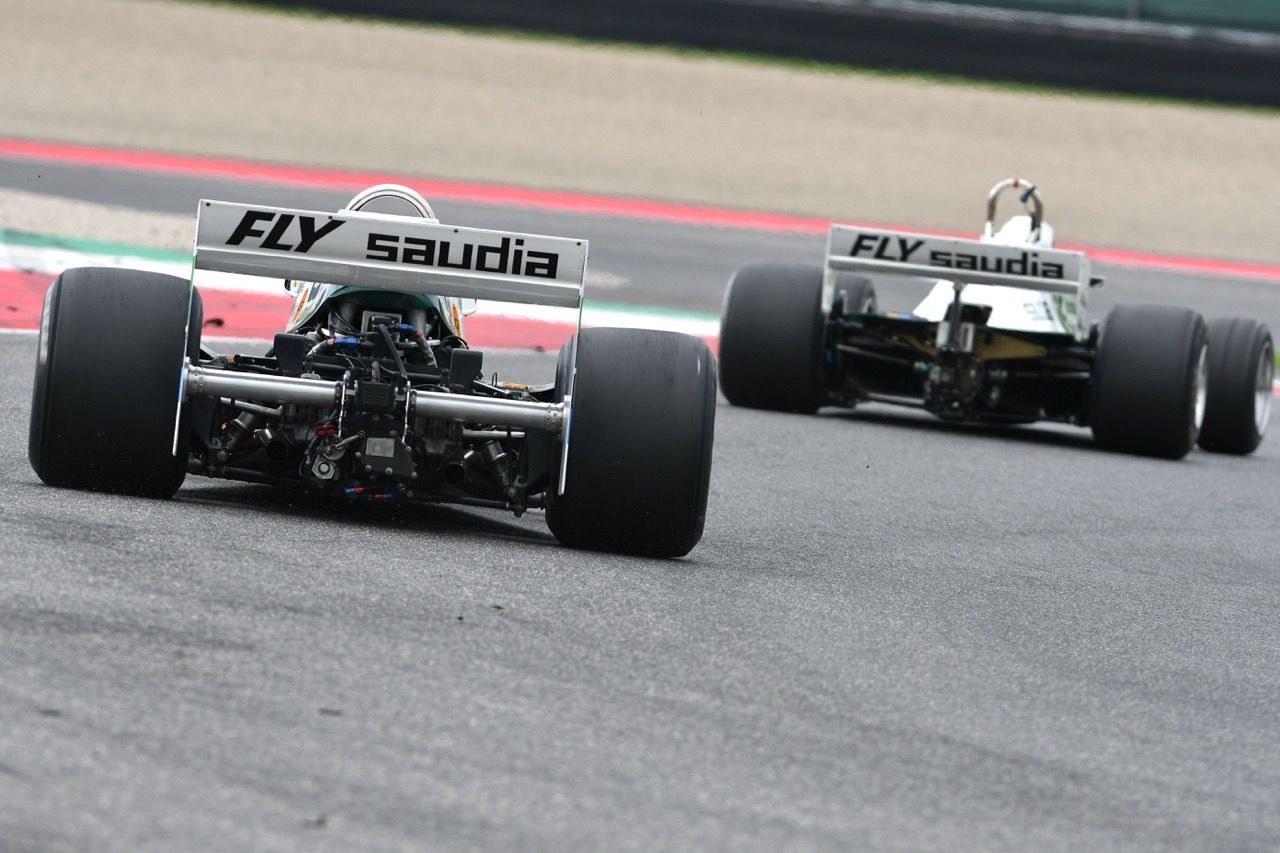
There is one final detail about Alan Jones that I find particularly touching. On Monday, 2 November 2026, he celebrated his 80th birthday. According to a tribute from his friend and broadcaster Eddie McGuire, Jones enjoyed his favourite caviar, although unusually, he stayed away from the Grey Goose vodka.
Three days later, he was gone. His wife Amanda announced his passing on behalf of the family, paying tribute to a husband, father and racing driver whose life had been devoted to motorsport.
For those who watched him race, he will always be the broad-shouldered Australian in the white Williams, fighting his machinery through corners with the sort of determination that made you wonder whether the steering wheel had personally offended him.
For Williams, he will forever be the man who helped establish the foundations of one of Formula One’s greatest teams.
And for Australia, he remains the last man to bring home the Formula One World Championship, despite the considerable talents of Mark Webber, Daniel Ricciardo and Oscar Piastri.
But I think his greatest achievement was something rather more personal. He began life with every advantage, lost them, travelled halfway around the world with almost nothing, worked his way through the unforgiving lower categories of motorsport and eventually became the best Formula One driver on the planet.
He experienced tragedy, disappointment, financial hardship and professional rejection, yet somehow turned every setback into another reason to keep going. And when he finally stood at the top of the world, he had done something that would surely have made his father immensely proud.
Motor racing has changed enormously since Alan’s championship season. The cars are safer, the drivers fitter, the teams wealthier and the entire operation infinitely more professional. But every now and then, I do wonder whether we’ve lost a little something along the way. Something wonderfully human, slightly ridiculous and completely impossible to manufacture.
Alan Jones had it in abundance.
Rest in peace, Mr Jones. And wherever you are, I hope there’s a decent racing car waiting, a cold drink afterwards, and absolutely nobody telling you what you’re allowed to say.