Feature
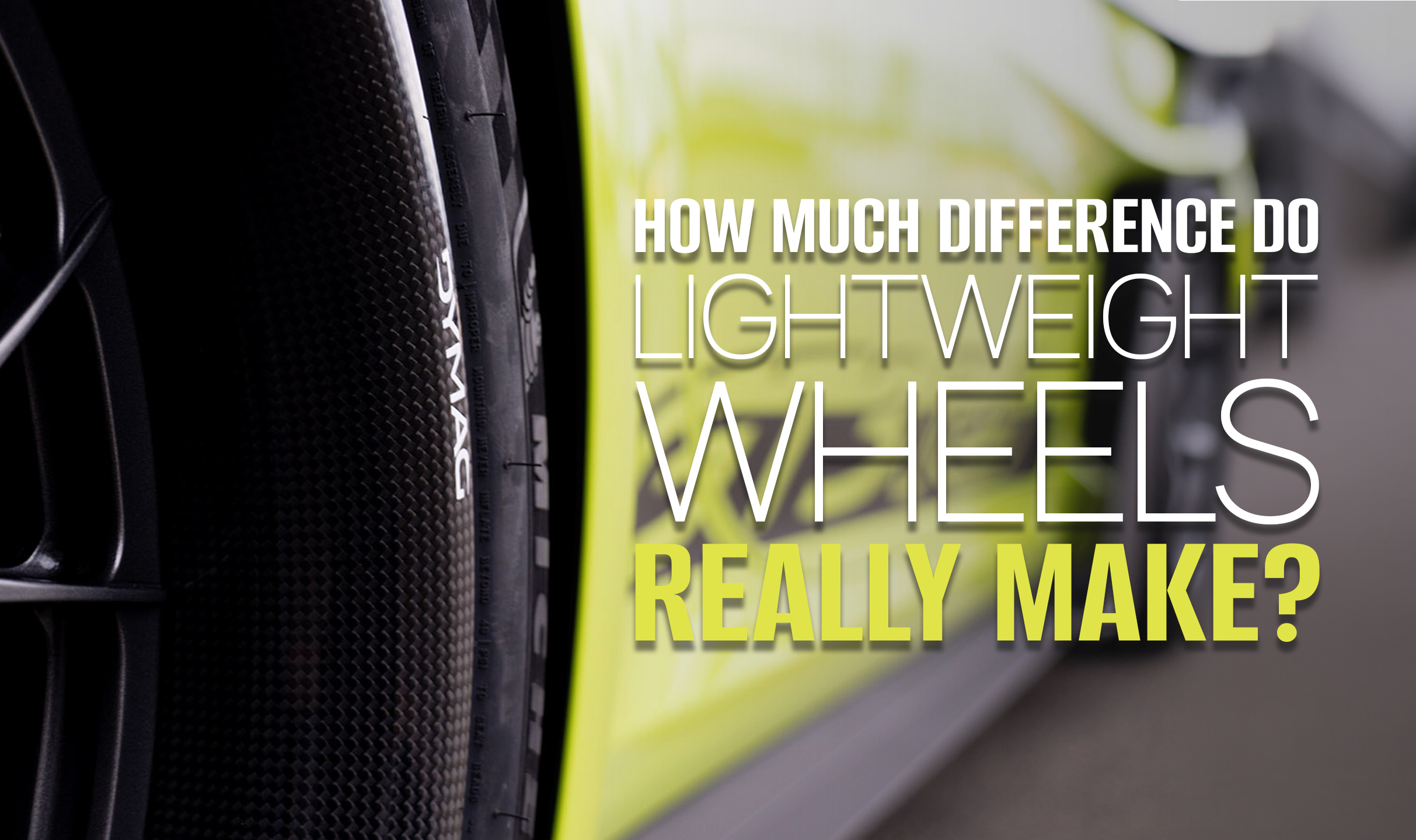
How Much Difference Do Lightweight Wheels Really Make?
A lighter wheel isn't just a lighter wheel. It is unsprung mass. It is rotating mass. But how much difference does that make?
October 10, 2026

After 14 years without a manual gearbox in their lineup, has Ferrari finally given us what we've all been wanting?
There are certain moments in life when you experience the peculiar satisfaction of discovering that somebody considerably cleverer than yourself has finally reached exactly the same conclusion you arrived at years ago. It doesn’t happen often, largely because the clever people usually remain stubborn long after everyone else has quietly accepted reality, but when it does happen, it produces a warm glow that sits somewhere between smugness and relief.
Ferrari announcing the 12Cilindri Manuale felt rather like that. Not because Ferrari had invented the manual gearbox. They’d managed that particular trick some seventy-five years too late. Nor because they’d suddenly discovered that changing gear yourself was enjoyable. Anyone who has ever driven an old Ferrari through the Alps on a cool autumn morning could have told them that before breakfast. No, the satisfying part was watching one of the world’s greatest engineering companies finally admit, albeit in the wonderfully understated way Italians have of admitting anything, that perhaps the relentless pursuit of perfection had accidentally wandered past enjoyment somewhere around 2010 without anybody noticing.

For years the conversation had gone something like this. “We miss manual gearboxes”. “Our new gearbox changes gear in eighty milliseconds”. “Yes… but we miss manual gearboxes”. “This one changes gear in sixty milliseconds”. “That’s lovely. We still miss manual gearboxes".
Eventually the engineers were talking in numbers while the customers were talking in emotions, which is rather like somebody asking whether you’d prefer fish and chips or roast beef and being told the microwave has become eighteen per cent more efficient. It’s impressive, certainly, but it isn’t really the answer to the question.
This sort of thing isn’t unique to cars. Human beings have an extraordinary ability to invent something objectively better before slowly realising they’ve accidentally removed the very thing that made the original enjoyable. Coffee machines can now remember your favourite drink, central heating can be controlled from the other side of the world, and some refrigerators are apparently capable of sending shopping lists to your phone. None of these developments are inherently ridiculous, although one does occasionally wonder what sort of emergency requires immediate remote access to the vegetable drawer, but they all illustrate the same point. We are remarkably good at making life easier. We are considerably less talented at making it happier.

Take watches. If your sole ambition is to know the correct time, buy a digital Casio. It’ll cost less than dinner for two, gain about a second every geological era and survive being dropped into the sea, run over by a bicycle and forgotten in a washing machine. Job done.
Instead, otherwise sensible adults spend the price of a family house on mechanical watches assembled from hundreds of tiny springs and gears that require regular servicing, occasionally lose time and become deeply offended if left in a drawer for too long. From a practical perspective, it makes almost no sense whatsoever. From an emotional perspective, it makes perfect sense.
People don’t buy a Patek Philippe because it’s the most efficient way of discovering whether it’s quarter past three. They buy it because every glance at their wrist reminds them that somewhere inside that tiny case, dozens of beautifully engineered components are dancing together in perfect harmony without a battery in sight. It’s satisfying. Not useful. Satisfying.
Those two words are so often confused that entire industries have been built upon the misunderstanding. The manual gearbox suffers from exactly the same problem. If your ambition is simply to travel from York to Edinburgh as quickly and efficiently as possible, a modern dual-clutch gearbox is unquestionably superior. It changes gear more quickly than your brain can consciously process the decision, never misses a ratio, never crunches a synchromesh and never decides that what you really meant was fourth when you confidently aimed for second. It is, in every measurable way, the better machine.

And yet, ask somebody who has just returned from a memorable drive what they enjoyed most, and almost nobody says, “The transmission completed three hundred and forty-two flawless gear changes”. Instead they’ll tell you about one. One glorious downshift approaching a tunnel where the revs landed perfectly, the V12 cleared its throat like Luciano Pavarotti announcing the opening act and, for perhaps two wonderful seconds, the entire world consisted of noise, movement and an entirely childish grin that refused to leave their face for the rest of the afternoon. That single gear change is worth remembering precisely because it required you to do it yourself.
If the gearbox deserves all the credit, the driver receives none. Ferrari knows this. Deep down, I suspect they’ve always known it. The difficulty was that modern Ferraris had become astonishingly clever. Every new generation arrived boasting more computing power, more sensors, more processing speed and more algorithms than the lunar missions that put mankind on the Moon. Somewhere beneath all that extraordinary technology sat a simple assumption that seemed perfectly logical at the time: if the computer can do something better than the human being, then surely the computer should do it instead.
It was an entirely reasonable conclusion. It was also gloriously wrong. Imagine taking your Labrador for a walk. Now imagine replacing him with an impeccably engineered robotic dog. It never pulls on the lead, never rolls in fox droppings, never disappears into a hedge in pursuit of something invisible and never returns carrying half the countryside in its fur. It obeys every instruction instantly, walks at precisely the correct pace and politely ignores every squirrel.
Objectively, you’ve improved the experience. Emotionally, you’ve just removed the dog. Driving is rather similar. The tiny imperfections are often the experience. Missing a gear occasionally isn’t enjoyable. Getting the next one absolutely right is. Stalling outside a busy café isn’t something anybody actively looks forward to, although every manual driver has done it at least once, and anyone claiming otherwise is almost certainly lying. Yet those little moments of human fallibility somehow become part of the relationship between driver and machine. You stop blaming the car. You laugh at yourself. The next pull-away becomes a tiny personal victory that no computer could ever deliver on your behalf.
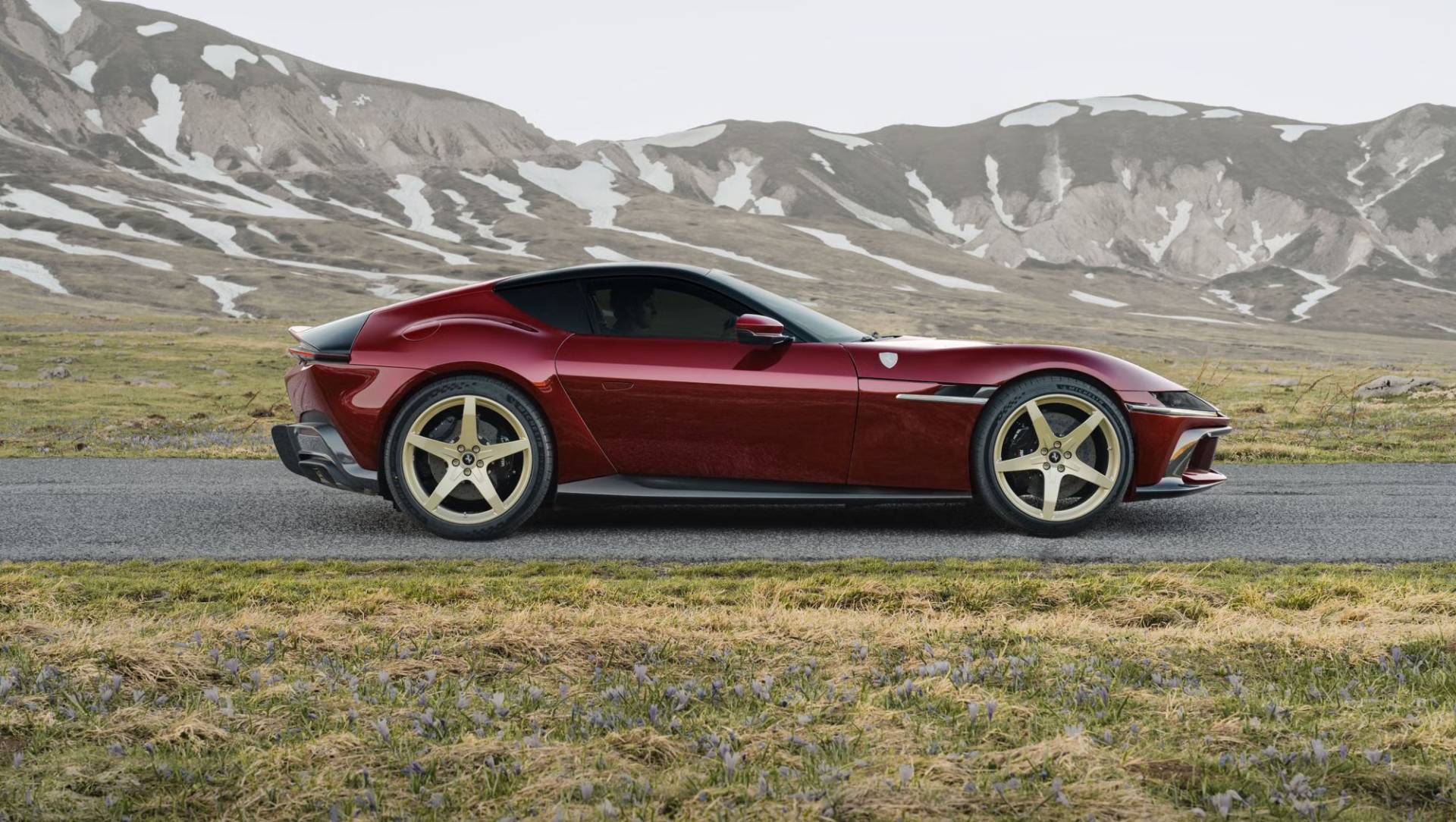
That is the wonderfully inconvenient truth Ferrari has finally embraced with the 12Cilindri Manuale. It isn’t about making the car faster. It isn’t about making the car easier. It’s about making the driver matter again. And that, oddly enough, may be the boldest thing Ferrari has done in decades. Because in a world obsessed with removing effort, Ferrari has chosen to put a little of it back.
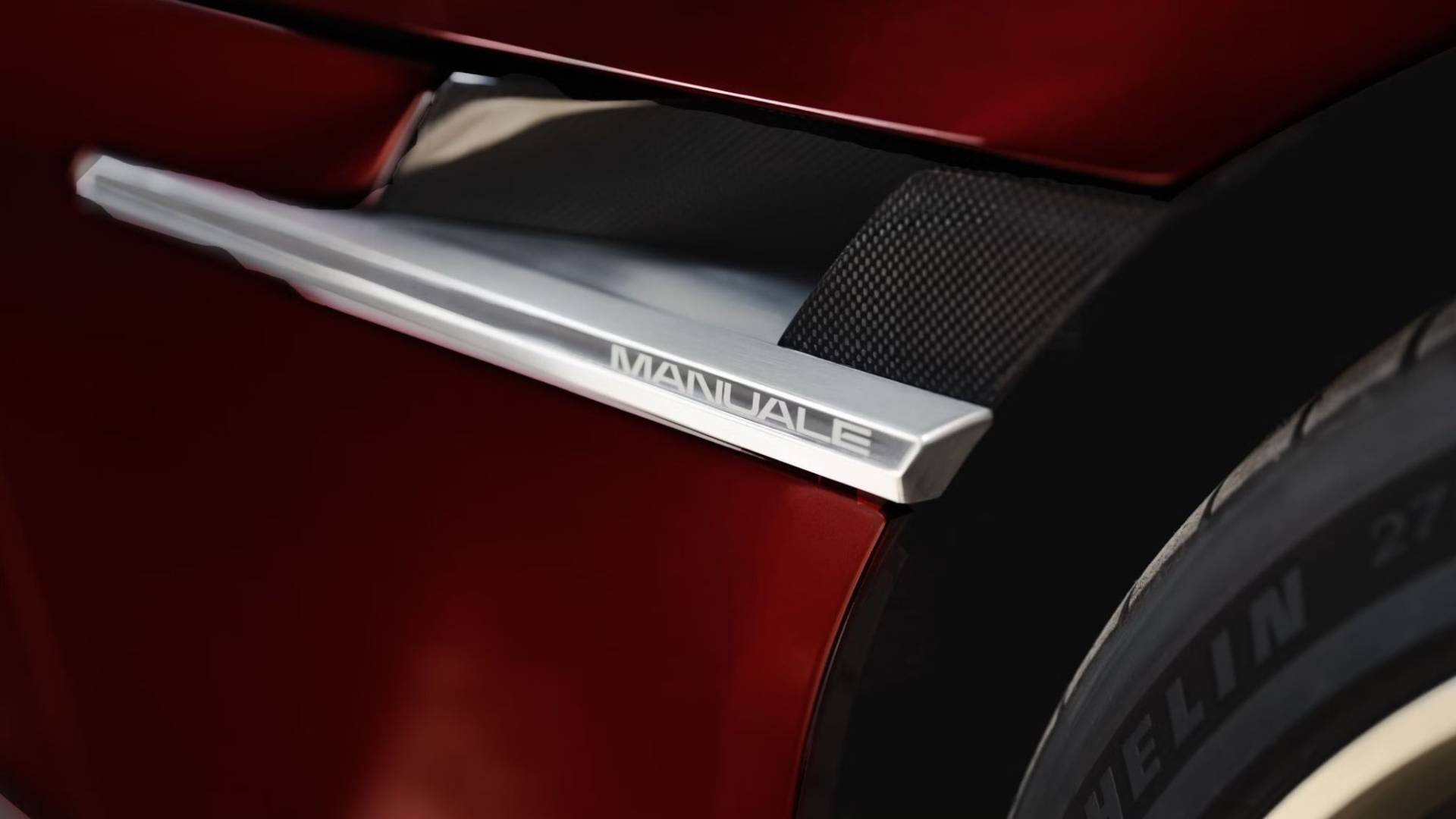
So, How on Earth Does It Actually Work? At this point, it’s probably worth addressing the question everybody asks within about thirty seconds of hearing the words manual Ferrari. “Hang on… haven’t they already invented manual gearboxes?” Well… yes. And no.
If Ferrari had simply taken the gearbox from a 550 Maranello, polished it up a bit and bolted it to the back of a modern 12Cilindri, the whole thing would probably have lasted somewhere between first gear and the nearest roundabout before turning itself into several hundred very expensive pieces of Italian confetti.
The problem is that cars have changed beyond recognition. Think of an Olympic weightlifter. Now ask him to wear the football boots he had when he was nine years old. They’ll still be football boots. They’ll still technically fit. But the outcome isn’t likely to be successful.
Modern Ferraris produce vastly more power, vastly more grip and transmit vastly greater loads through the transmission than their ancestors ever had to cope with. Everything happens more violently. The engine spins faster, the tyres grip harder and the electronics expect microscopic precision every single time you move your foot.

That creates an interesting problem. People wanted a manual gearbox from the 1990s. Physics rather stubbornly refused. So Ferrari asked a different question. Instead of trying to recreate the mechanics of a classic manual gearbox, what if they recreated the feeling?
That sounds suspiciously like marketing until you stop and think about it. After all, nobody enjoys a manual gearbox because they particularly admire clutch release bearings. Nobody lies awake at night thinking about selector forks. What people love is the conversation. Your left foot presses the clutch. Your left hand guides the lever. Your right foot feeds in the throttle. The engine answers. Sometimes approvingly. Sometimes with all the enthusiasm of a teenager asked to tidy their bedroom.
Ferrari’s job wasn’t to preserve the hardware. It was to preserve that conversation. That’s where the cleverness begins. The clutch pedal is still there, exactly where your left foot expects it to be. The polished gear lever still moves through a beautifully machined gate. You still choose every ratio yourself. You can still fluff a gearchange. You can still stall it if your coordination deserts you at precisely the wrong moment. The difference is hidden beneath the surface.

Instead of your clutch pedal being connected directly to the clutch through a purely mechanical system, your foot is effectively making a request. Before anyone starts muttering that computers ruin everything, consider this. When you press the accelerator in almost any modern car, you’re already doing exactly the same thing. There’s no cable running from your foot to the engine anymore. Your foot tells a computer what you’d like to happen, and the computer carries it out with astonishing speed and accuracy. Nobody misses the cable.
Ferrari has simply applied the same thinking to the clutch, but with one very important rule. The computer never gets to decide. You do. It isn’t choosing the gear. It isn’t rescuing every mistake. It isn’t playing the hero. It’s quietly standing in the background making sure your instructions happen exactly as you intended.
Think of it as the world’s finest orchestra conductor. He doesn’t play the violin, the trumpet or the piano. He simply makes sure every talented person performs together at precisely the right moment. The star of the performance is still the orchestra. In this case, that’s you.
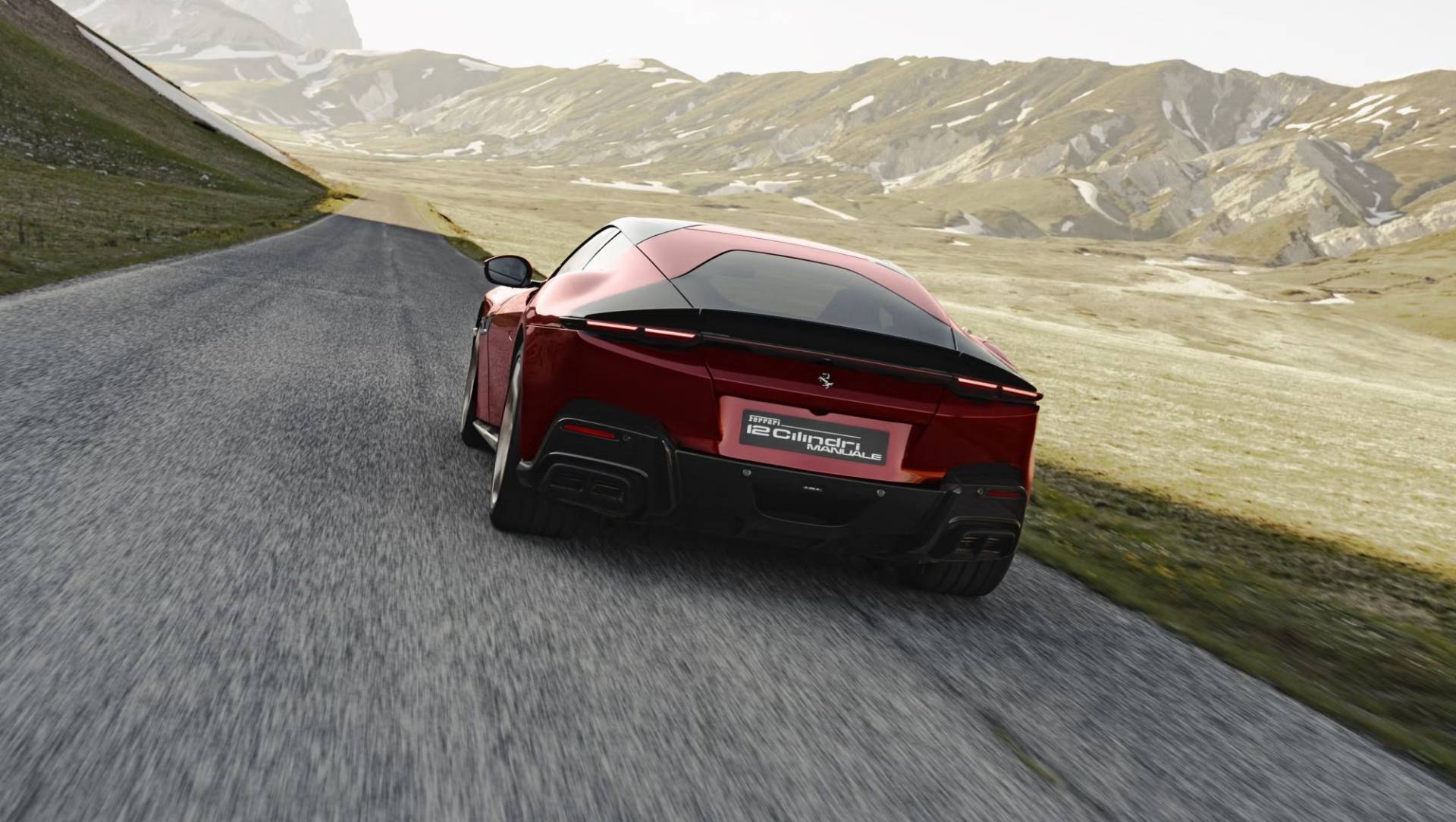
Which might be the most surprising thing about the entire car. After spending years proving that computers could drive ever larger chunks of the experience, Ferrari has suddenly invested an extraordinary amount of engineering effort into making sure the human being remains the most important component.
That’s wonderfully irrational. It’s also wonderfully Ferrari. Because deep down, the company finally seems to have remembered something that enthusiasts have known all along. Nobody finishes a great drive talking about the computer. They talk about the moment they absolutely nailed the change from third into second, the V12 sang through a tunnel, and for a few glorious seconds they felt like the greatest driver in the world. Even if they stalled it at the next set of traffic lights.