Feature
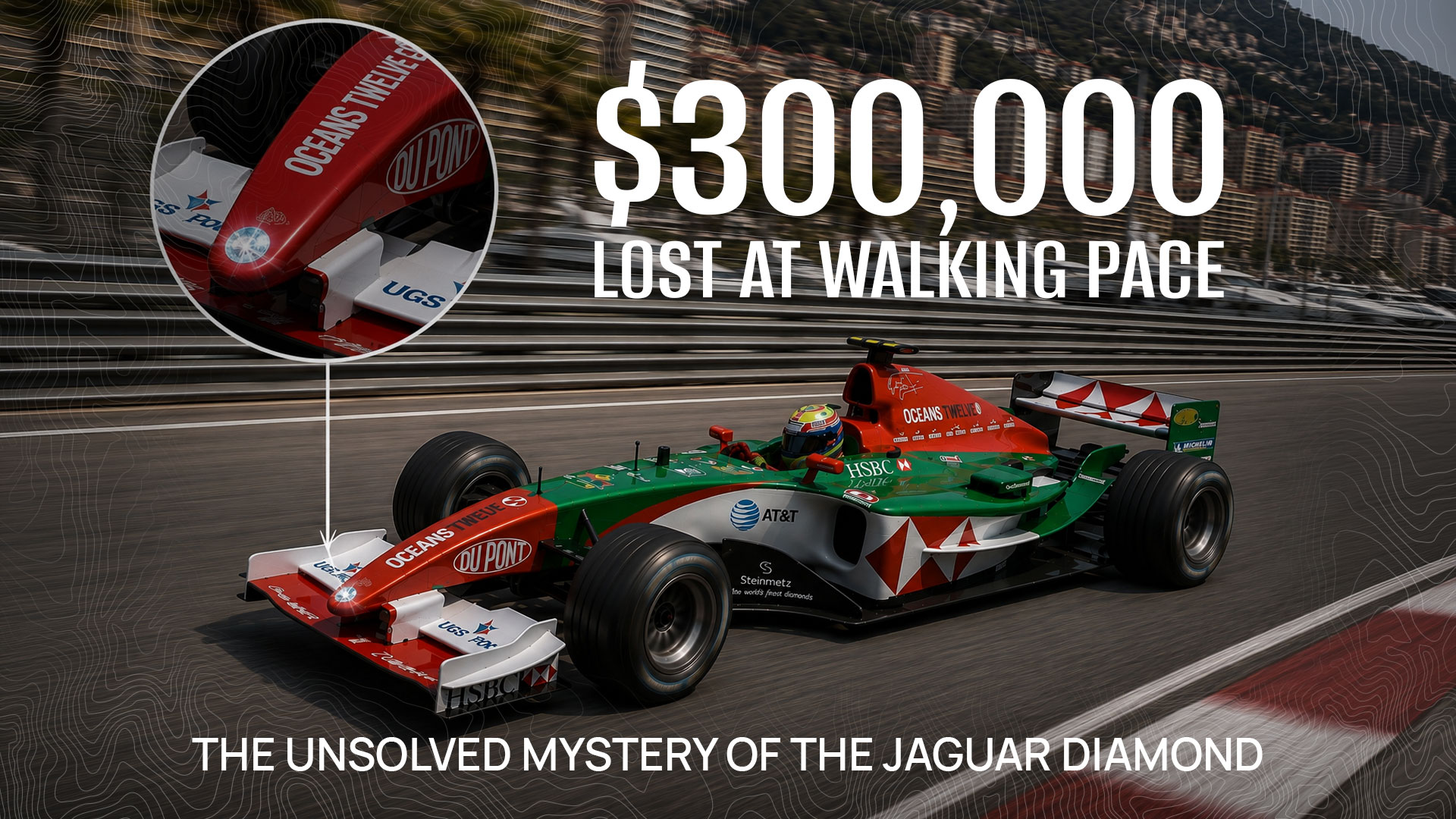
The Most Expensive Thing Ever Lost at Walking Pace
Jaguar’s $300,000 Monaco diamond stunt was outrageous enough. Then the car crashed, the diamond vanished, and an F1 mystery was born.
September 17, 2026
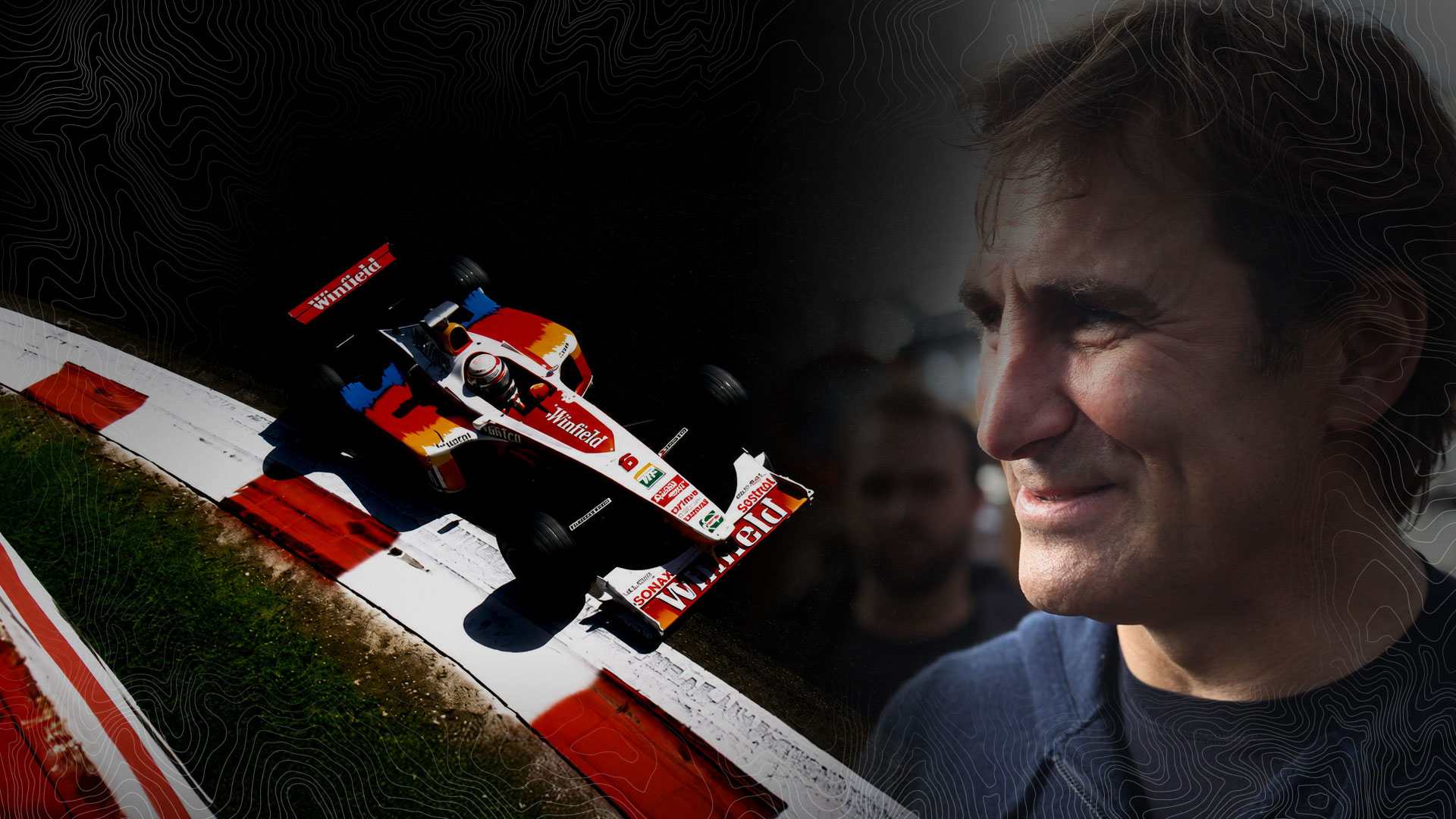
From life-changing setbacks to heroic triumphs, this is the inspiring story of one of sport's most inspiring and resilient characters.
There are some lives that feel as though they were written with too much drama to be believable. Too many highs, too many falls, too much courage packed into one human being. Alex Zanardi lived one of those lives. And now, with his passing at the age of 59 on May 1st, 2026, the world has lost not just a racing driver, not just an athlete, but something far rarer — a man who showed all of us how to live when life stops playing fair.
He did not simply exist within motorsport. He burst into it, full of life, laughter, and a kind of infectious energy that made people gravitate towards him. You could hear him before you saw him. Not the engine — him. That unmistakable joy, that sense that he knew something about life that the rest of us were still trying to figure out.
And perhaps he did. Because long before the world would come to know Alex Zanardi as a symbol of resilience, he was just a boy from Bologna, chasing something fast.
He was born Alessandro Zanardi in October 1966, in a part of Italy where motorsport sits quietly in the background, like a heartbeat you only notice when you stop and listen. The story goes that his early life was shaped by both passion and loss. His sister died in a road accident when he was young, something that would have broken many people before they had even begun. But Alex didn’t fold. He turned toward speed instead of away from it, as if trying to understand it, tame it, perhaps even make peace with it.
Karting was where it began. Like so many Italian racers, he found his rhythm in those tiny machines, low to the ground, buzzing with intent. But even then, there was something different about him. He wasn’t just fast. He was expressive. Wild at times. Joyful always.
He climbed the ladder in the traditional way — Formula 3, Formula 3000 — but always with that sense that he wasn’t just chasing results. He was chasing the feeling. The connection between man and machine that can’t be measured on a stopwatch.
Formula One came calling in 1991. It was the dream. It always is. But dreams, as Zanardi would come to learn again and again, don’t always behave themselves.
His time in Formula One was, on paper, modest. He raced for Jordan, Minardi, Lotus, and Williams between 1991 and 1999, starting 41 races and scoring just a single point. There were flashes of brilliance, moments where you could see the raw ability, but it never quite came together in the way it needed to at that level.
And yet, if you ask those who watched him closely, they’ll tell you that those statistics miss the point entirely. Because Zanardi wasn’t defined by Formula One. Not then. Not ever.

America, as it so often does, offered him something different. He moved to CART — the precursor to IndyCar — in the mid-1990s, and suddenly, everything clicked. The tracks were different. The racing was closer. The environment seemed to suit him in a way Formula One never quite had.
And then came the magic. Two championships, back-to-back, in 1997 and 1998. Fifteen race wins. Overtakes that people still talk about today as if they happened yesterday.
If you’ve ever watched his move at Laguna Seca, you’ll know exactly what I mean. Diving down the Corkscrew in a way that felt less like a racing manoeuvre and more like a statement of intent. It was reckless, brilliant, unforgettable. That was Zanardi at his best. Not cautious. Not calculated. Alive.
He became a hero in America. Larger than life. The kind of driver people didn’t just support, but loved. And then, just as it felt like the story was settling into something resembling a fairytale, everything changed.

September 15th, 2001. Lausitzring, Germany. Motorsport has a way of reminding you, brutally and without warning, that it is never entirely under control. Zanardi spun exiting the pits during a CART race. What followed was catastrophic. His car was struck at high speed, the impact so violent that it severed both of his legs and left him with life-threatening injuries. He lost nearly three-quarters of his blood.
For a moment, it didn’t feel like a racing accident. It felt like an ending. Even now, years later, people who witnessed it struggle to describe it without pausing. But if you think that was the end of Alex Zanardi’s story, then you don’t know Alex Zanardi. Because what happened next is the part that turns this from a tragedy into something far more powerful.
He survived. And not just in the technical sense. Not just because doctors managed to keep him alive through hours of surgery and unimaginable trauma. He survived in spirit. When he woke up, he didn’t ask why. He didn’t rage at the injustice of it all. He didn’t dwell on what he had lost. He said something that would echo far beyond that hospital room.
“Who cares about my legs? I am alive”.
It sounds simple. Almost too simple. But think about it for a moment. Think about what most of us would say, what we would feel, waking up to that reality. And then think about that response. That was Alex Zanardi.
Within two years, he was back in a racing car. Not just sitting in it. Racing it. Using hand controls, he helped develop himself, and he returned to the Lausitzring in 2003 to complete the laps he had never finished. It was part tribute, part defiance, and entirely him. From there, he went on to compete in touring cars, including the World Touring Car Championship, where he even won races again.
Pause on that for a second. A man who had lost both legs in a racing accident returned to competitive motorsport and stood on the top step of the podium again. It almost sounds absurd when you say it out loud for so many reasons. But still, somehow, that wasn’t the most extraordinary part of his story. Because Alex Zanardi wasn’t finished reinventing himself.
He turned to handcycling. At first, it might have seemed like a natural transition. Still racing, still competing, just in a different form. But what he achieved there went far beyond anything anyone could reasonably expect.
He didn’t just participate. He dominated. Four Paralympic gold medals. Two in London 2012. Two more in Rio 2016. Six medals in total across those Games, alongside twelve World Championship titles.

He trained like a man who had something to prove, but not to others. To himself. And every time he crossed a finish line, there was that same smile. That same joy. As if he couldn’t quite believe how lucky he was to be there at all.
That’s the thing people often miss about Zanardi. They talk about resilience, about determination, about strength. All of which are true. But they don’t quite capture the essence of him. Because he wasn’t just enduring life. He was enjoying it. There’s a difference.
In 2020, life tested him again. During a handcycling event in Italy, he was involved in another horrific accident, colliding with a truck. This time, the injuries were severe head trauma. He was placed in an induced coma, and for a long time, the world held its breath.
Recovery was long. Complicated. Quiet. For years, updates were scarce. It felt as though the man who had always been so present, so visible, had slipped into the background. And yet, even then, his story wasn’t about decline. It was about endurance.
He fought. In the same way he always had. Until, on a Friday evening in May 2026, surrounded by his wife Daniela and son Niccolò, that fight finally came to a peaceful end.
There’s a temptation, when someone like Zanardi passes, to focus on the achievements. The titles. The medals. The statistics. They are, of course, extraordinary. But they aren’t what stays with you. What stays with you is the way he approached everything. The laughter. The refusal to feel sorry for himself. The ability to look at a life that had been torn apart — twice — and still find a way to say, with complete sincerity, that it was worth living.
Motorsport has always had its heroes. Drivers who are fast, brave, occasionally reckless. But very few transcend the sport itself. Zanardi did. Because his story isn’t really about racing. It’s about perspective. It’s about what happens when everything you think defines you is taken away, and you’re left with a choice. You can retreat. Or you can rebuild. He rebuilt. And not into something smaller, or safer, or diminished. He rebuilt into something greater.
There’s a line often used in sport about leaving a legacy. It gets thrown around so easily it starts to lose meaning. But in this case, it feels entirely appropriate. Alex Zanardi changed the way people see adversity. He changed the way people think about disability. He showed that limits, more often than not, are negotiable. He made resilience look normal. And perhaps that’s the most remarkable thing of all. Because for him, it was. Just another challenge. Just another race.
If you’ve ever had a bad day, a frustrating one, a moment where things didn’t go your way, think about Zanardi. Not in a way that diminishes your own experience, but in a way that reframes it. Because somewhere, in a hospital bed, having just lost both legs, a man smiled and said he was lucky to be alive. And then went on to prove it. Over and over again.
There will be faster drivers. There will be more successful athletes. Records will be broken, championships won, names will come and go. But there will only ever be one Alex Zanardi. And the world is better for having had him in it.

Written by: Paul Pearce