Feature
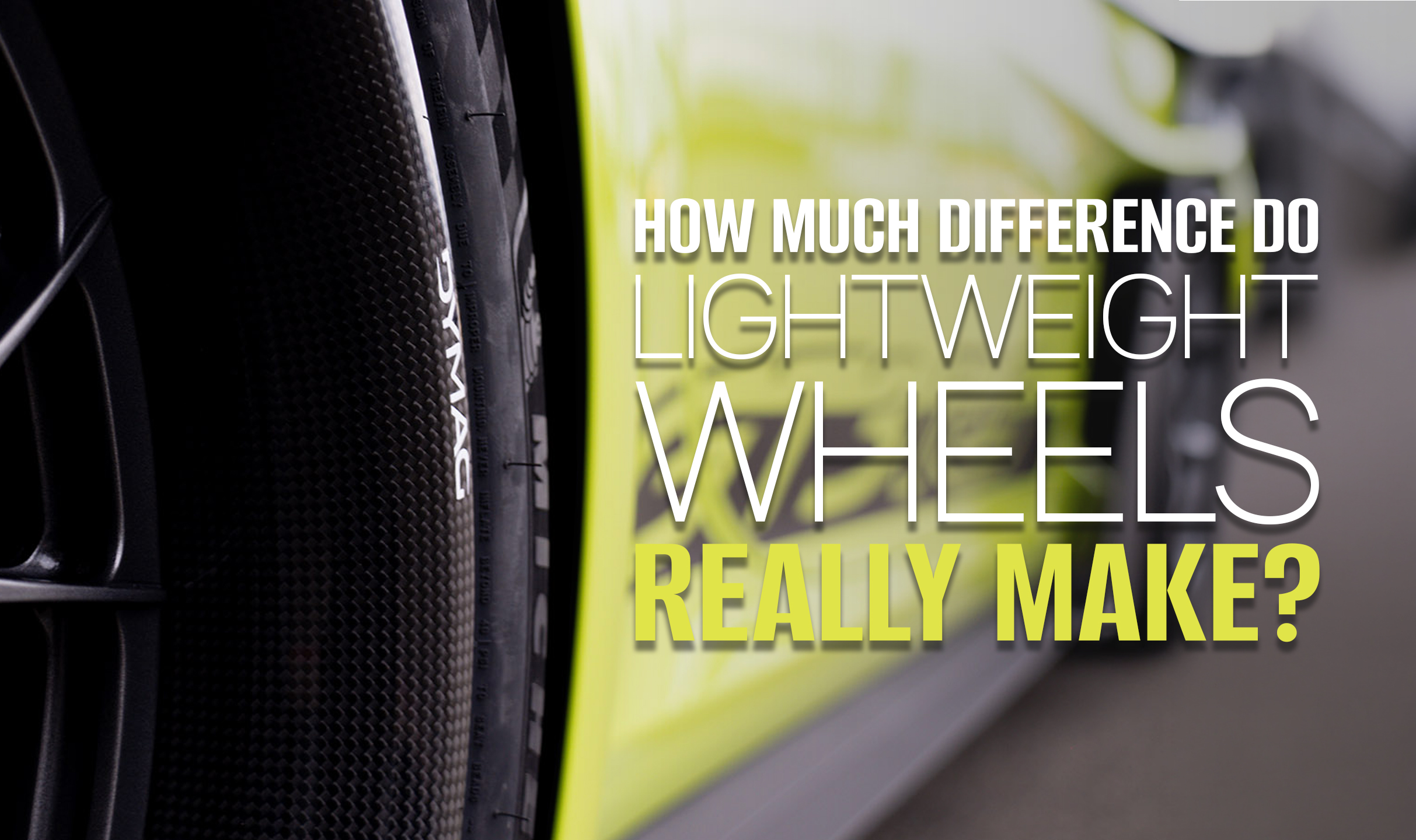
How Much Difference Do Lightweight Wheels Really Make?
A lighter wheel isn't just a lighter wheel. It is unsprung mass. It is rotating mass. But how much difference does that make?
October 10, 2026
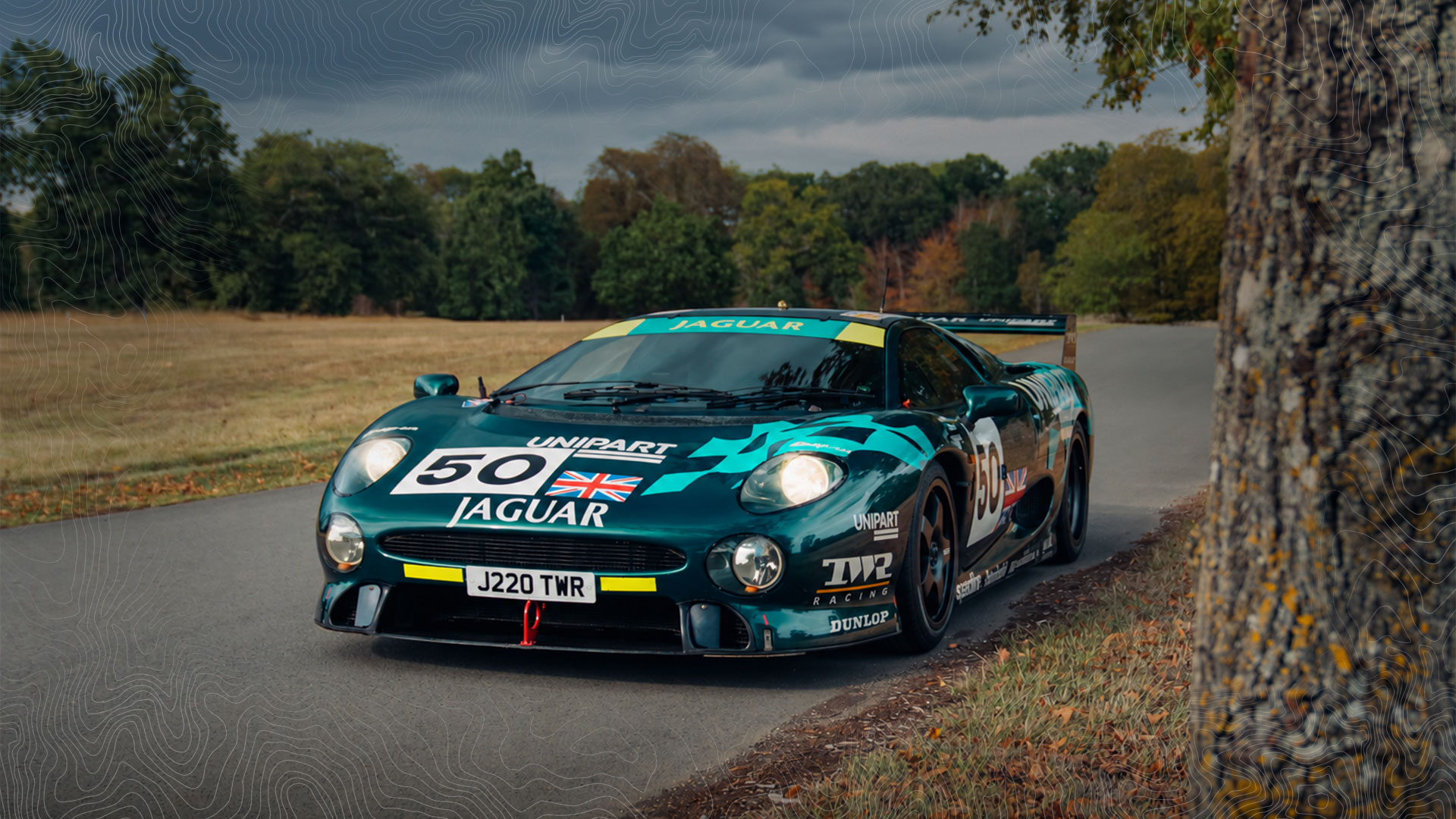
A controversial Le Mans victory, royal ownership, and a remarkable new lease of life on the road. This Jaguar XJ220C-LM has quite a story to tell.
When we think of the legendary supercars of the late '80s and early '90s, the usual suspects spring to mind. Ferrari F40, Porsche 959, Lamborghini Diablo, and of course the McLaren F1. They're the poster cars that defined a generation, and today they're among the most celebrated and valuable machines ever built.
One car that doesn't always seem to get quite the same recognition is the Jaguar XJ220. Perhaps it's the badge, perhaps it's the controversial story behind its development and the fact it wasn’t the all-wheel-drive V12 Jaguar promised, or perhaps it simply had the misfortune of arriving in an era packed with automotive icons. Whatever the reason, we've always thought the XJ220 deserves a little more love.
After all, this was a car that could easily exceed 200mph in 1992, looked like something from another planet, and remains one of the most spectacular shapes of automotive history. With just 281 production examples built, it's hardly common either.
When Jaguar unveiled the concept in 1988, it promised a glorious V12 engine and four-wheel drive. By the time production began, those plans had been abandoned in favour of a twin-turbocharged 3.5-litre V6 driving the rear wheels.
Some prospective customers weren't particularly impressed, especially given the £400,000 asking price and the economic climate of the early '90s. But with world-beating figures and genuine racing DNA, the production XJ220 was hardly a disappointment from a performance perspective.
Whether or not you think the regular XJ220 is impressive, this one is another story altogether. Currently being offered by our friends at Furlonger Specialist Cars is something rather extraordinary. A 1993 Jaguar XJ220C-LM, one of just four competition examples built by JaguarSport and Tom Walkinshaw Racing, and the very car that crossed the finish line first in its class at the 1993 24 Hours of Le Mans. Oh, and it's now road registered.
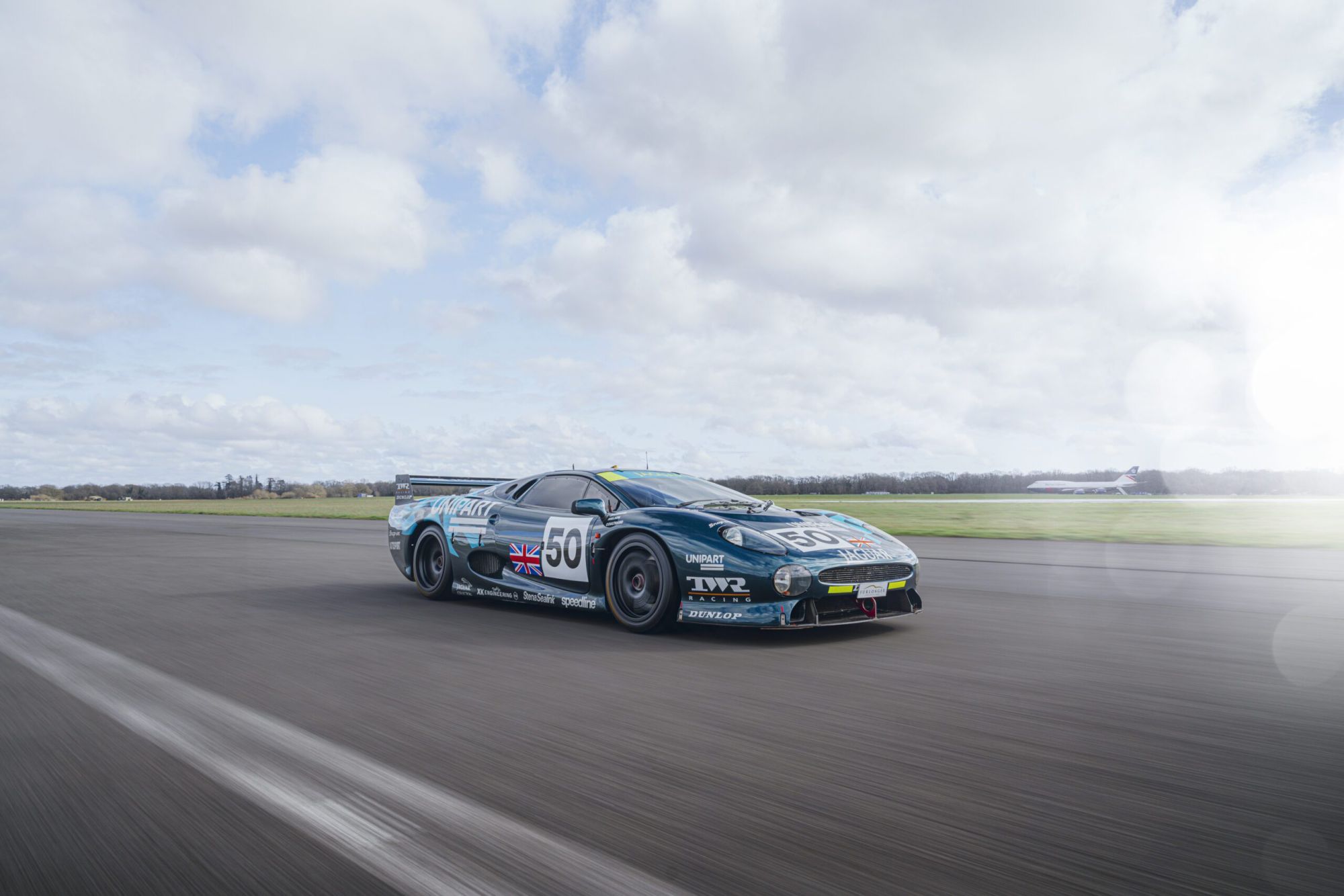
By the early '90s, Jaguar and Tom Walkinshaw Racing were already well acquainted with success at Le Mans, having taken outright victories in 1988 and 1990 with their Group C prototypes. With GT racing enjoying something of a resurgence, the decision was made to develop a competition version of the XJ220, bringing Jaguar's flagship supercar to the world's most famous endurance race.
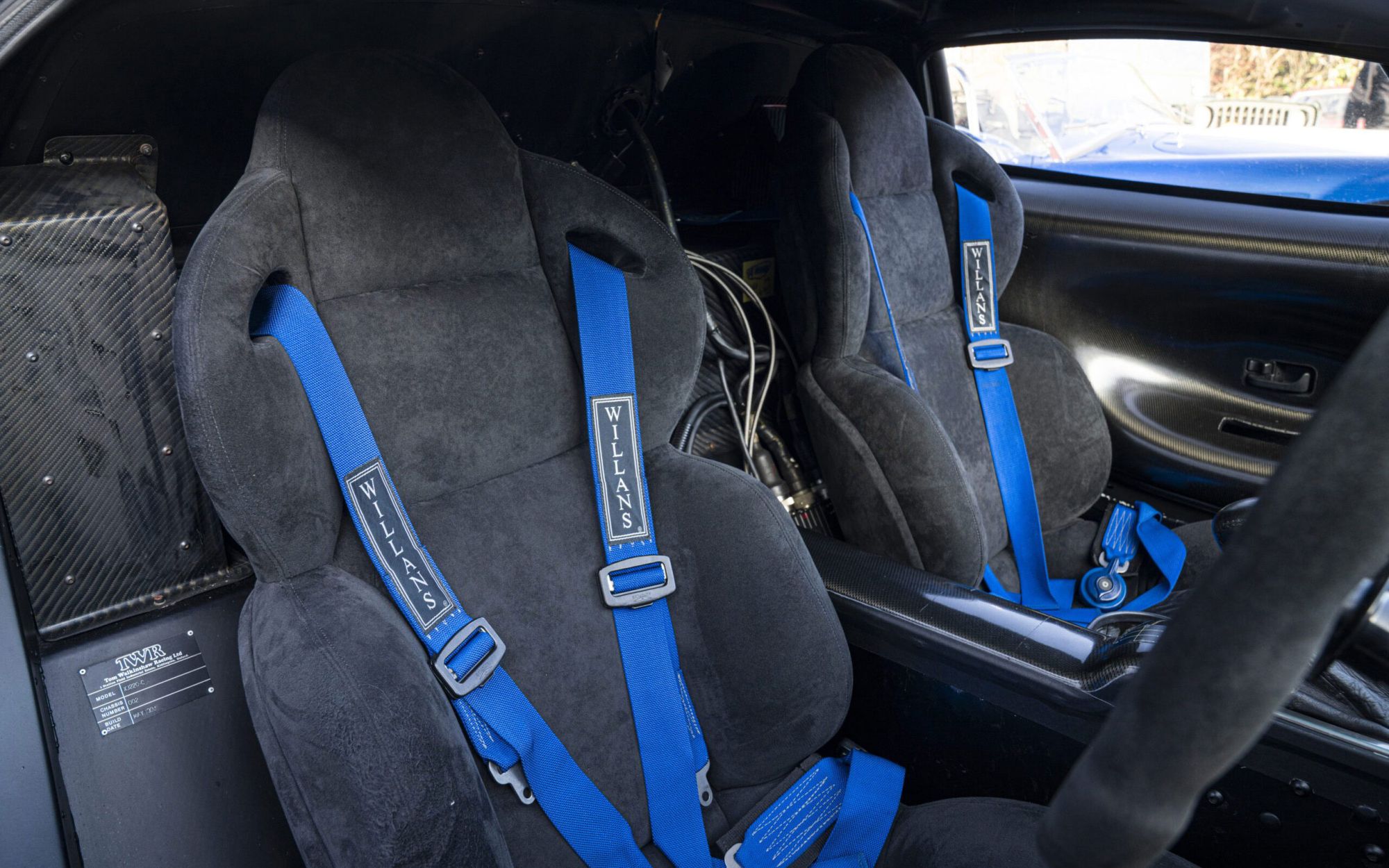
The result was the XJ220C-LM, and it was considerably more than a road car with a roll cage and a big rear wing. Around 400kg was stripped from the XJ220, with detachable carbon-composite bodywork, extensive use of carbon fibre and Kevlar, and a completely stripped-out interior, although, almost amusingly in this application, rather than proper carbon bucket seats, the car can be seen here wearing Alcantara-clad versions of the road-going XJ220’s plush chairs, compelte with harnesses.
The suspension, brakes and cooling systems were comprehensively upgraded, while many of the road car's components were replaced with lightweight racing alternatives. Then there was the engine.
The road-going XJ220's 3.5-litre twin-turbocharged V6 was already a serious piece of equipment, but in full competition specification it was reportedly capable of producing up to 850bhp, although race regulations meant it couldn't unleash all of that potential at Le Mans.
Remember, this was 1993. Ferrari's F40 was producing 478bhp, and even the mighty McLaren F1 had 627bhp. The Jaguar could operate in another league, even when you consider some F40 LMs were running over 700bhp.
Just four XJ220C-LMs were produced, three of which were entered into the 1993 Le Mans 24 Hours. And it's here that the story of this particular car, chassis 002, gets especially interesting.
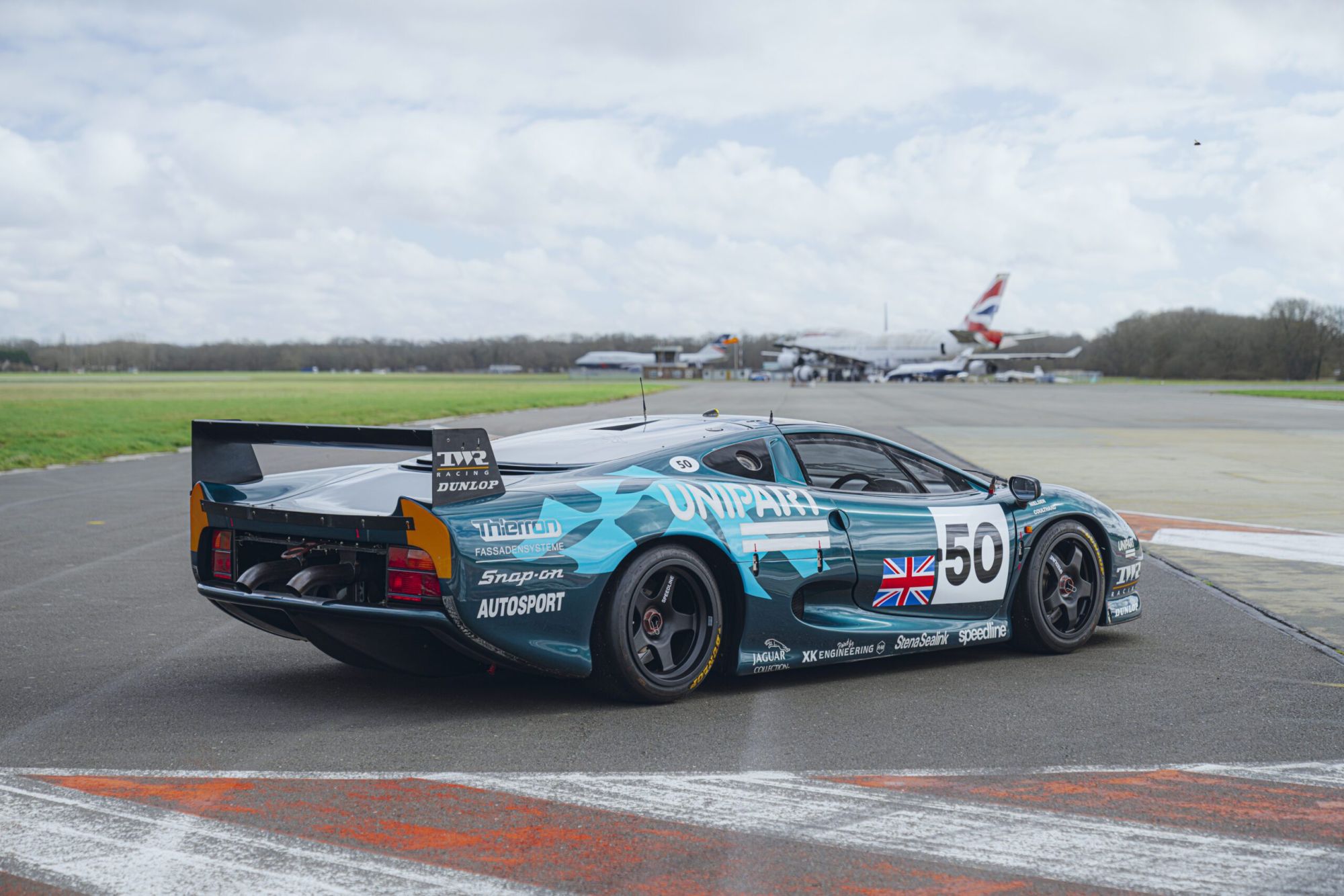
Wearing race number 50, chassis 002 was the lead Jaguar entry at Le Mans in 1993, driven by John Nielsen, David Brabham and a young David Coulthard, who would make his Formula 1 debut the following year.
Against a competitive GT field, the Jaguar delivered exactly what its creators had hoped for, overcoming setbacks during the race to cross the finish line first in class and 15th overall. It should have been another famous chapter in Jaguar's already illustrious Le Mans history. Unfortunately, things weren't quite that straightforward.
The controversy centred around the car's lack of catalytic converters. Jaguar maintained that the cars complied with the relevant IMSA regulations under which they had been entered, but the organisers disagreed.
The Jaguars were permitted to race while the matter was under appeal, and although the FIA subsequently upheld Jaguar's position, the Le Mans organisers ruled that the appeal had not been submitted within the required timeframe. The result? The class victory was taken away.
It remains one of the more controversial decisions in Le Mans history. The three drivers still retain their winners' trophies, and from Jaguar's perspective, the car had done everything it needed to do on the circuit. Sometimes motorsport's greatest stories aren't quite as straightforward as the results sheet suggests.
Following its appearance at Le Mans, chassis 002 was retired to the TWR Museum collection before finding its way into the ownership of the Sultan of Brunei, whose extraordinary collection of supercars needs little introduction.
It subsequently returned to the UK and, in 2000, was loaned to Jaguar for its travelling Heritage display, appearing at a number of high-profile events. There was even a reunion with David Brabham at the 2011 Goodwood Festival of Speed, almost two decades after he helped drive the car to that controversial Le Mans class victory.
More recently, the Jaguar has formed part of one of the UK's most significant collections of Group C and historic Le Mans racing cars, which seems an entirely appropriate home for something with this pedigree. But its latest chapter might just be the most fascinating of all.

Having recently taken custody of the car, Furlonger Specialist Cars carried out a comprehensive mechanical appraisal, alongside a rather unusual undertaking: making the XJ220C-LM legal for road use.
Despite its extensive racing modifications, the car retains enough of the road-going XJ220's fundamental architecture to make the process possible, although understandably it required a significant amount of work, a full breakdown of which can be provided upon request.
The result is something truly remarkable. According to Furlonger, chassis 002 is now the only road-registered example of the four XJ220C-LMs, meaning this genuine Le Mans race car can legally be driven on public roads.
Just imagine that for a moment! Not a road car inspired by a racing machine, or a modern recreation paying tribute to a famous livery. This is the actual car that David Coulthard, David Brabham and John Nielsen raced at Le Mans in 1993, complete with its extraordinary competition specification and all the history that comes with it.
The thought of seeing it on a British B-road, let alone hearing that gruff twin-turbocharged V6 coming on boost, is almost ridiculous. In the best possible way. And while there's certainly no shortage of spectacular road-legal track cars these days, there's something rather different about a machine that was built specifically to compete at Le Mans more than three decades ago.
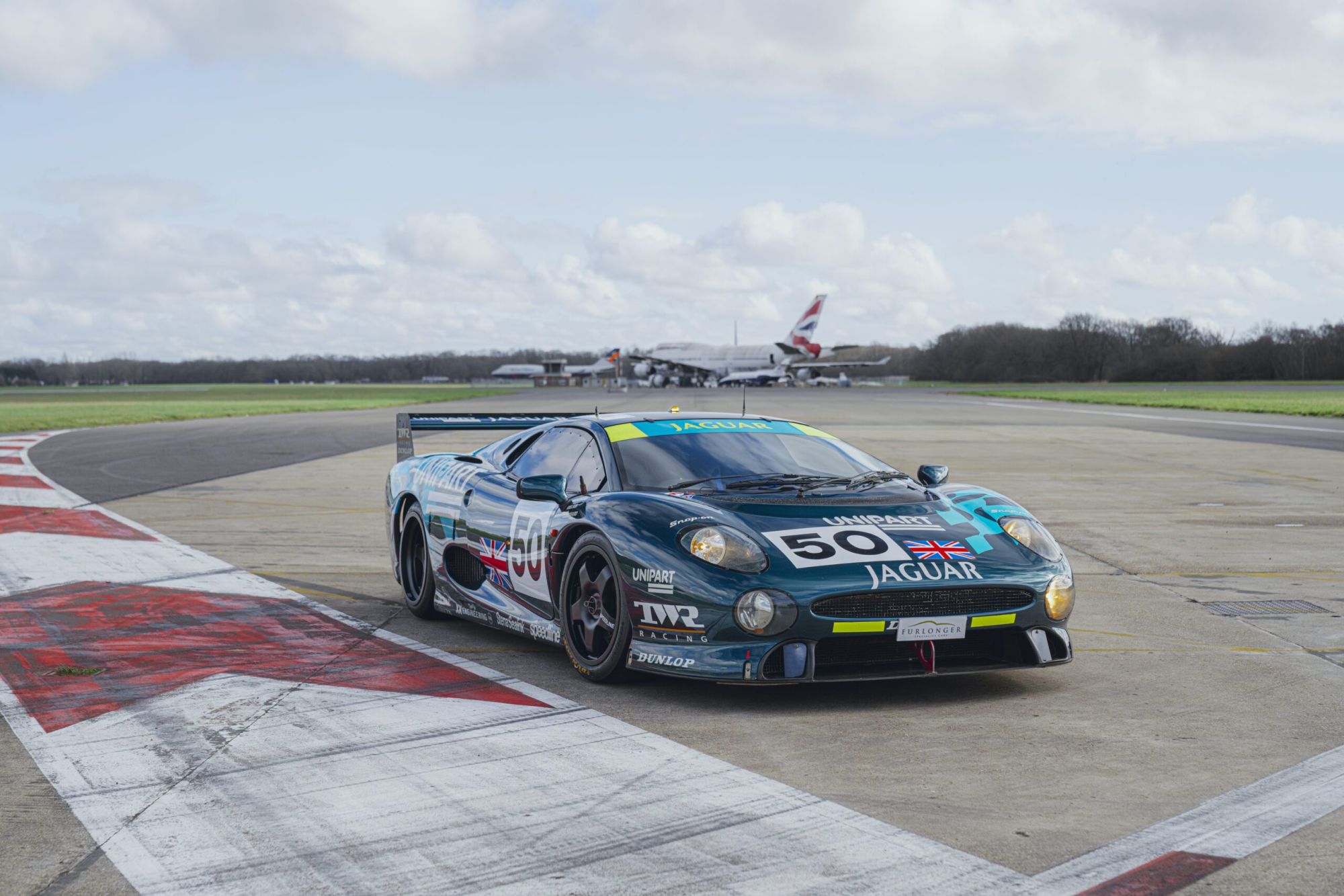
At four-and-a-half million pounds, this is obviously an exceptionally serious purchase, even by the standards of the world's most collectable supercars. But then, how do you put a price on something like this?
The regular XJ220 has arguably spent too long in the shadows of its Italian rivals, and still dows in terms of value, despite being every bit as deserving of a place among the great supercars of its era. It's a spectacular-looking machine with extraordinary performance, genuine racing connections and a fascinating backstory.
This XJ220C-LM takes all of that and turns it up to eleven. One of just four built, driven by three famous racing drivers, first across the line in its class at Le Mans, subsequently owned by the Sultan of Brunei, and now capable of being enjoyed on the public road.
We can only hope its next owner makes the most of that number plate.