
Feature
The New Tesla Roadster — Genuis or Insanity?
The Tesla Roadster: Or how Elon Musk spent nine years inventing a car that can do a backflip, drive on the ceiling and make absolutely no sense whatsoever.
October 19, 2026
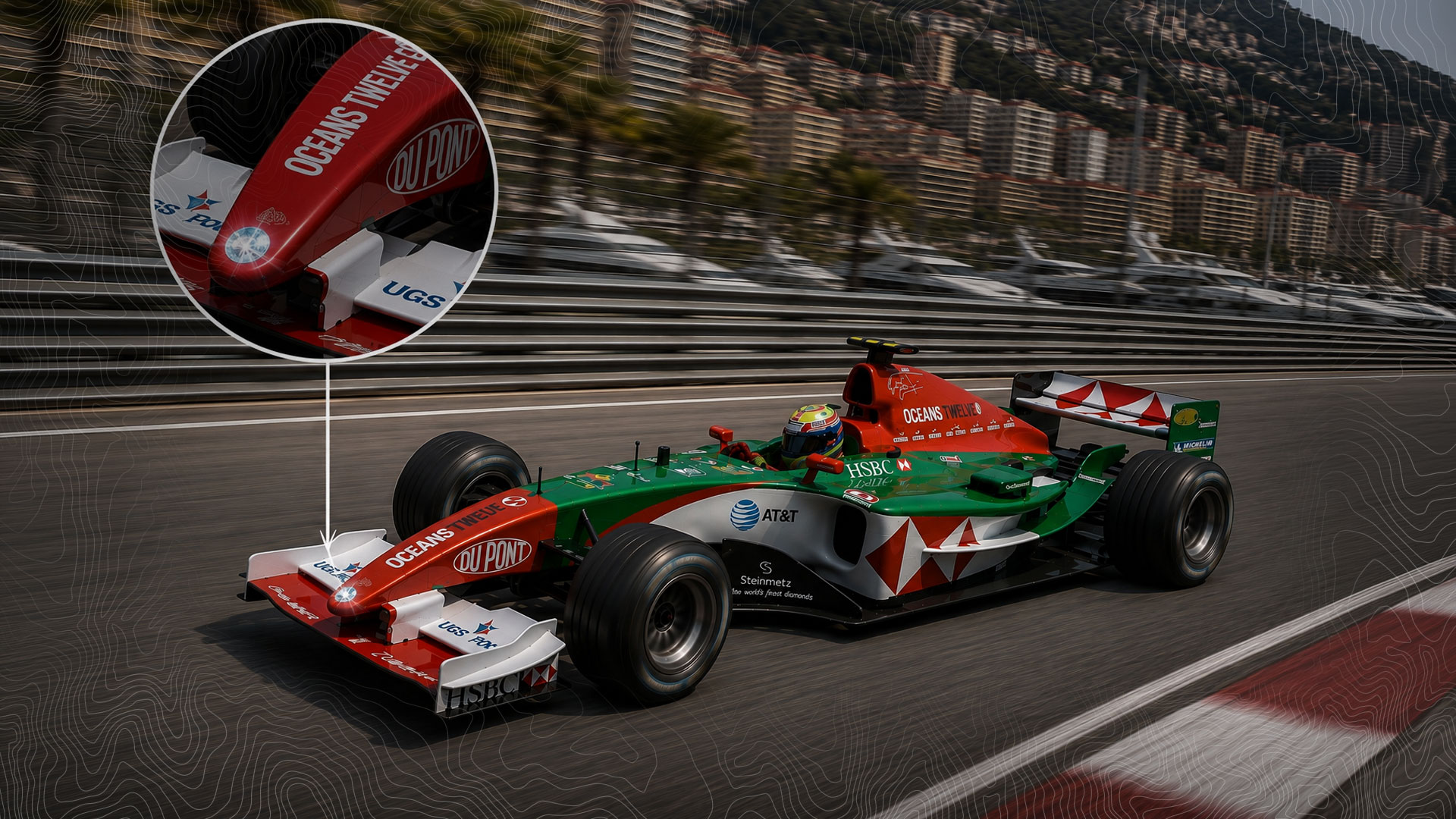
Jaguar’s $300,000 Monaco diamond stunt was outrageous enough. Then the car crashed, the diamond vanished, and an F1 mystery was born.
Formula One teams spend enormous amounts of money finding tiny advantages. They will spend six months and several million pounds developing a winglet no larger than a digestive biscuit if they think it might make the car two hundredths of a second faster around Barcelona. Entire departments exist to save weight measured not in kilograms, not in grams, but in fractions of grams. Somewhere in every Formula One factory there is an engineer who has devoted three years of his life to removing the equivalent weight of a Hobnob from a suspension component.
Which is why it remains astonishing that, in 2004, somebody looked at one of the most sophisticated racing cars ever built and decided what it really needed was jewellery. Not racing technology. Not a new aerodynamic package. Not a lighter gearbox casing. Jewellery.
And not just any jewellery either. A real diamond worth around $300,000, attached to the nose of a Formula One car moments before it was unleashed onto the streets of Monaco. Even now, more than twenty years later, it sounds less like a genuine motorsport story and more like the plot of a comedy film written by somebody who had spent too long in a casino. Yet every word of it is true.
To understand how we arrived at this moment of spectacular corporate optimism, we need to go back to Jaguar Racing. Jaguar’s Formula One adventure was one of those projects that looked magnificent on paper. Ford had purchased Stewart Grand Prix, poured vast sums of money into the operation and wrapped everything in British Racing Green.
The expectation was that Jaguar would become a major force. The reality was rather different. Despite possessing all the resources of one of the largest car manufacturers in the world, Jaguar somehow spent most of its Formula One life achieving the sort of results normally associated with teams operating out of industrial units behind tyre shops. They weren’t hopeless. They weren’t embarrassing. They simply had a remarkable ability to be less successful than everybody hoped they would be.
This mattered because Formula One teams need publicity. Sponsors demand it. Manufacturers demand it. Board members demand it. If the car isn’t making headlines for overtaking Ferraris, it had better be making headlines for something else.
.jpg)
Enter Hollywood. The Monaco Grand Prix of 2004 coincided with the launch of Ocean’s Twelve, the sequel to Ocean’s Eleven. The cast list read like a gathering of people voted Most Likely To Be Attractive. George Clooney was there. Brad Pitt was there. Matt Damon was there. Julia Roberts was there. If charisma could be converted into electricity, the film could probably have powered Monaco for a month.
The movie’s central theme was theft. More specifically, stealing extremely valuable things. It is impossible to overstate how important that detail becomes later. As part of a promotional arrangement, Jaguar agreed to help promote the film. Nobody knows exactly who first suggested attaching actual diamonds to the cars, though one suspects alcohol may have played a supporting role in the meeting.
Somewhere, deep inside a Monte Carlo hotel suite, a conversation almost certainly occurred that went something like this:
“Monaco is glamorous".
“Yes".
“Diamonds are glamorous".
“Yes".
“Movie stars are glamorous".
“Yes".
“Formula One cars are glamorous".
“Yes".
“What if we combined all four?”
“You’re promoted".
And so the decision was made. Two genuine diamonds would be attached to the noses of the Jaguar R5s. One would sit proudly on Mark Webber’s car. The other would adorn Christian Klien’s machine. They weren’t particularly large, but they were very real and very expensive. The engineers, who had dedicated their careers to precision, efficiency and mechanical excellence, presumably watched all this unfold with the same expression a surgeon might wear if somebody suggested decorating a heart transplant with Christmas lights.
Still, the diamonds were fitted. The cars rolled onto the grid. The television cameras loved it. The photographers loved it. The marketing department loved it. The insurance company probably started drinking heavily. Then the race began.
Monaco’s Fairmont Hairpin is the slowest corner in Formula One. Modern racing cars can reach nearly 200 mph around parts of the circuit, yet here they slow almost to walking pace. Tourists could probably jog around it faster than the cars negotiate the turn.
This is important because what happened next means the world’s most famous missing diamond wasn’t lost in a spectacular 180 mph accident. It was lost at a corner where a pensioner on a mobility scooter might reasonably expect to keep up.
On the opening lap, Christian Klien found the barriers. There was a crunch, a shower of carbon fibre, and the Jaguar’s race was over almost before it had begun. The damage wasn’t enormous by Formula One standards, but it was more than enough to destroy the nose section carrying the diamond.
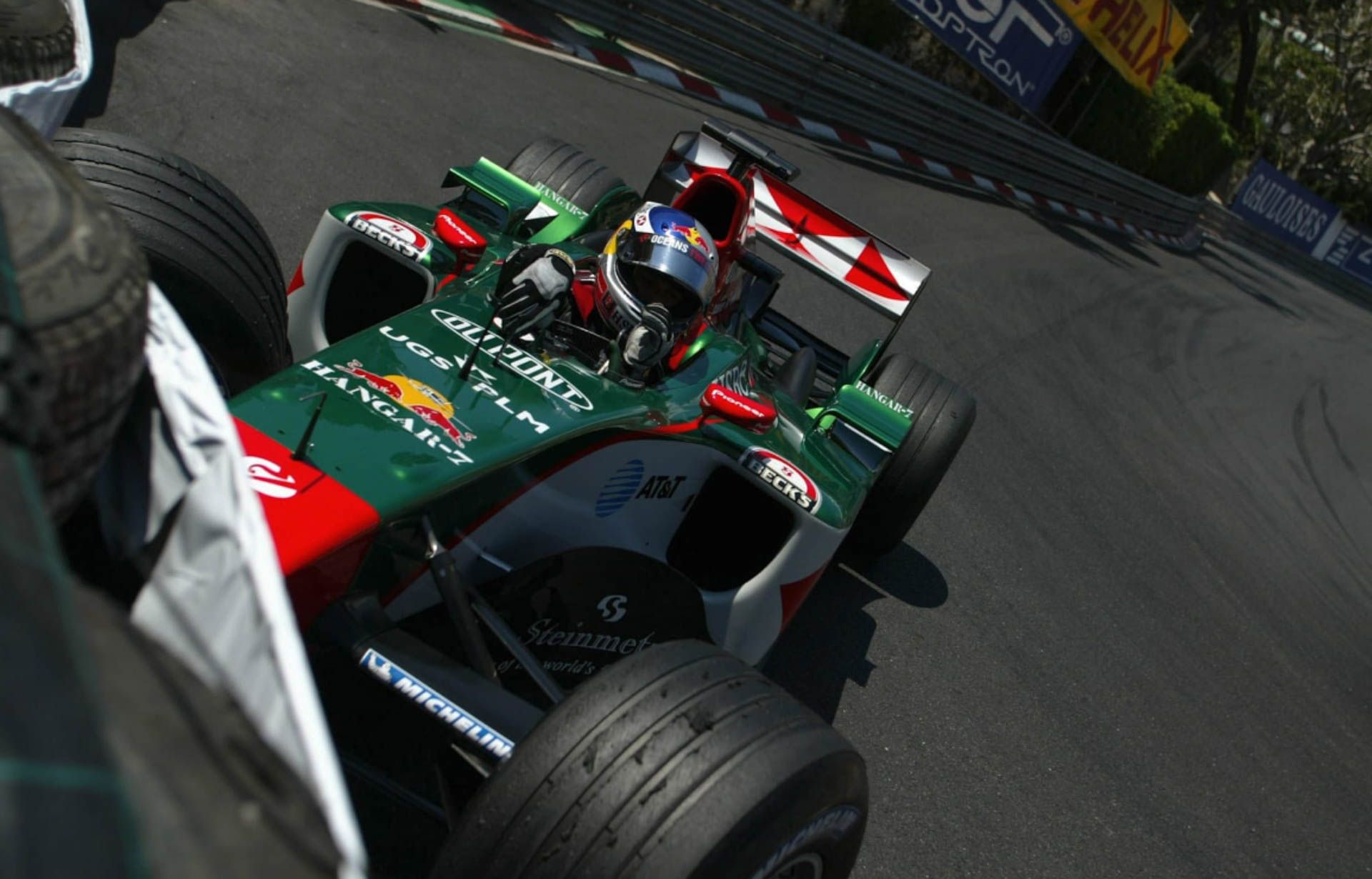
The car was recovered. The debris was collected. The team surveyed the damage. Then somebody asked a question that would become one of motorsport’s great mysteries.
“Where’s the diamond?”
At first nobody was concerned. It must still be attached somewhere. Perhaps it had become lodged inside the damaged nosecone. Perhaps it had fallen into the cockpit. Perhaps it was sitting underneath a piece of bodywork waiting to be discovered.
It wasn’t. The diamond had vanished. Completely. The wreckage was inspected. The barriers were checked. The recovery vehicles were examined. Nothing. The diamond appeared to have simply ceased existing.
And that was when the story transformed from a slightly silly marketing exercise into one of the greatest treasure hunts in sporting history. Because somewhere within the tiny principality of Monaco was a loose diamond worth hundreds of thousands of dollars. And nobody knew where it had gone.
The rumours began almost immediately. The first theory was the simplest. A marshal had found it. This theory was popular because it was believable. Monaco marshals are excellent at their jobs, but if a sparkling gemstone worth more than a Ferrari 360 Modena landed at your feet while nobody was looking, it would probably create at least a brief ethical discussion in your head. Somebody, somewhere, imagined a retired marshal sitting in a villa overlooking the Mediterranean, occasionally opening a safe and smiling at the world’s most profitable volunteer shift.
Others suspected the recovery crews. Perhaps the diamond had fallen into a flatbed truck, become trapped in a corner, and been discovered later that evening by somebody who suddenly found themselves having a dramatically better week than expected.
Then came the conspiracy theories. After all, Ocean’s Twelve was a film about stealing valuable objects. The promotional stunt involved a valuable object. The valuable object disappeared. It was almost too perfect.
People began asking whether the whole thing had been staged. Had Jaguar quietly removed the diamond before the race? Had the studio engineered the disappearance? Had the theft itself become the marketing campaign? One journalist described it as the greatest publicity stunt in Formula One history. Another described it as the most expensive example of losing your keys ever recorded. Neither description felt entirely wrong.
The more people thought about it, the stranger it became. If you were creating publicity for a heist movie, you couldn’t invent a better story. A priceless object vanishes during a glamorous event attended by celebrities, millionaires and international media, before disappearing forever without a trace. Even the screenwriters probably looked at the headlines and thought, “That’s a bit unrealistic".
There were whispers that the stone had never been real. Others claimed Jaguar recovered it quietly and simply pretended it was missing. Some believed the insurers knew more than they admitted. A few insisted one of the Hollywood stars had ended up with it. George Clooney denied stealing it, which is exactly what somebody who had stolen it would say.

The mystery only grew because the diamond never resurfaced. Not a year later. Not five years later. Not twenty years later. Nobody has ever appeared claiming to have found it. No jeweller has reported an unusual story. No former team employee has produced it during a retirement interview. No deathbed confession has emerged. It simply vanished from history.
This is perhaps the most extraordinary part of the whole tale. Most secrets eventually escape. Someone talks. Someone boasts. Someone gets drunk at a dinner party and tells the wrong person. Yet the diamond remains missing.
Which means one of two things has happened. Either it genuinely disappeared into some inaccessible corner of Monaco and has remained hidden ever since, or somebody knows exactly where it is and has remained astonishingly disciplined for more than two decades.
Personally, I prefer the second explanation. I like to imagine that somewhere in Europe there is an elderly gentleman who occasionally attends dinner parties wearing a faint smile whenever Formula One appears on television. He never says anything. He never hints. He simply knows something nobody else knows.
Perhaps he was a marshal. Perhaps he drove a recovery truck. Perhaps he swept the circuit after the race. Perhaps he was just the luckiest man in Monaco that weekend. Then again, perhaps none of those theories is true. Perhaps the diamond is still there.
Monaco is rebuilt, resurfaced and repaired constantly. Roads are dug up. Barriers are replaced. Buildings are renovated. Somewhere beneath layers of tarmac, concrete and history could sit a tiny gemstone waiting patiently for somebody to uncover it.
Imagine finding it. You are digging a drainage channel beneath the Fairmont Hairpin. The excavator bites into the earth. The bucket lifts. Something catches the sunlight. Suddenly you’re holding a small sparkling stone that once travelled around Monaco attached to the front of a Formula One car. The first thing you’d do is laugh. The second thing you’d do is check whether anybody else had seen it.
What makes the story so wonderfully ridiculous is that it perfectly captures Formula One itself. This is a sport capable of producing engineering masterpieces. It employs some of the brightest minds on the planet. It spends billions chasing perfection. Yet every now and then it reminds us that it is still run by human beings. Human beings who occasionally convince themselves that attaching a small fortune to the front of a racing car is an excellent idea.
Jaguar entered Monaco hoping to promote a Hollywood blockbuster. They succeeded beyond their wildest dreams. Today, most people couldn’t tell you where Mark Webber finished that race. Few remember how the Jaguar performed. Fewer still remember anything about the team’s season. But mention Jaguar Racing and Monaco in the same sentence, and somebody will almost certainly say, “Weren’t they the team that lost a diamond?”
They were. And unless one of motorsport’s greatest mysteries is ever solved, they always will be.
Somewhere out there is a diamond that once rode on the nose of a Formula One car. Nobody knows where it is. Nobody knows who has it. And if the film studios went to Monaco in 2004 looking for material for Ocean’s Fourteen, they probably found the perfect plot.